Can My Business Record Customer Calls in India? What Should I Check Before Enabling Recording?
A cautious business checklist covering recording purpose, notice, personal data, access, retention, third-party AI processing and the questions to resolve before enabling call recording.
India telecom compliance series · Article 12 of 18 · Sources checked 1 October 2026
A cautious business checklist covering recording purpose, notice, personal data, access, retention, third-party AI processing and the questions to resolve before enabling call recording.
What the current regulatory question really is
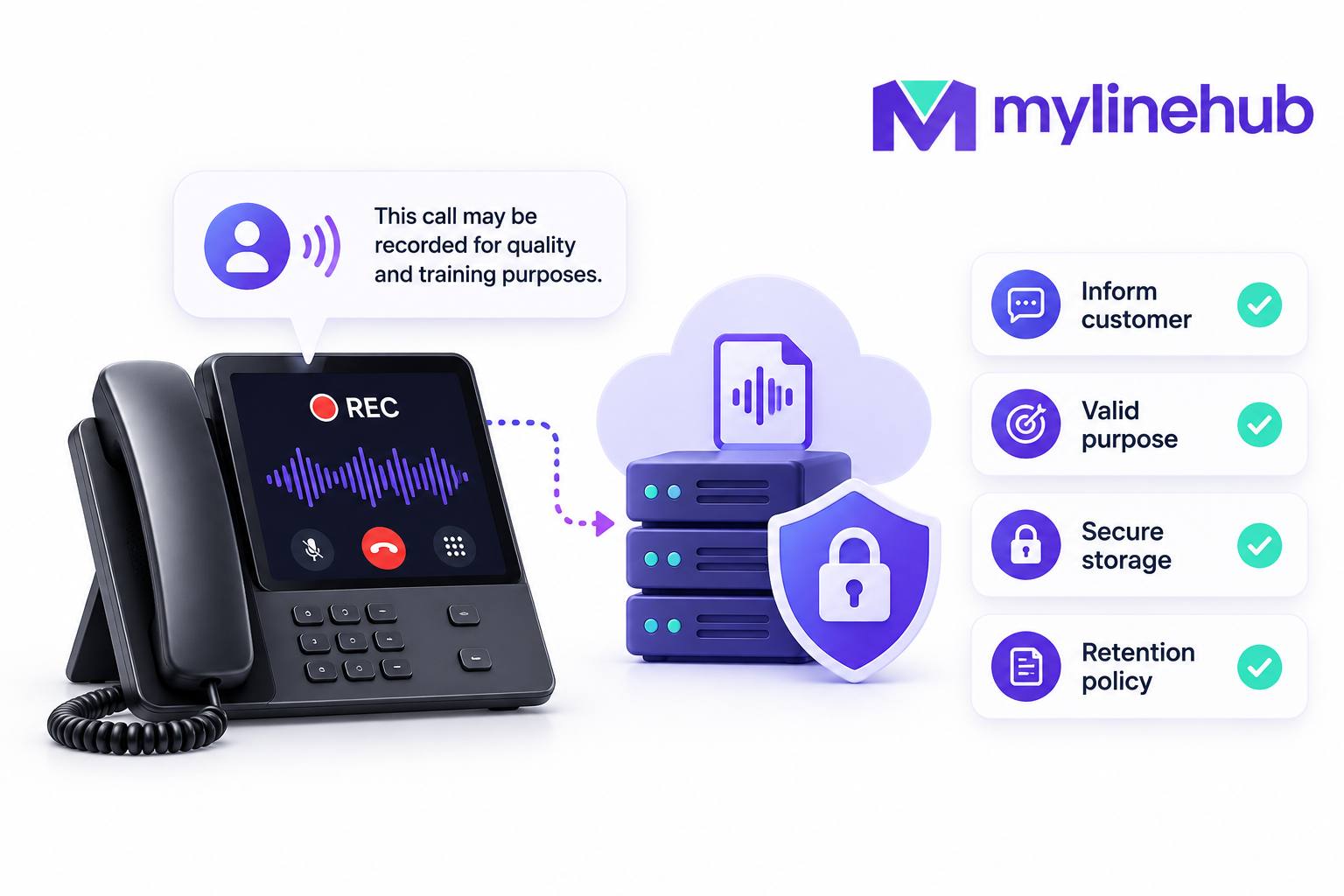
Call recording touches more than telecom routing. Audio can contain personal data, identifiers and sensitive business information, so purpose, notice, access, retention, security and third-party processing need a documented basis. India’s DPDP Act 2023 and final DPDP Rules 2025 create a data-protection layer with phased commencement; the exact obligation applicable on a given date and context should be checked before turning a technical recording feature into a default business policy.
First separate the terms people usually mix together
| Term | What it means here | Why it matters |
|---|---|---|
| Recording purpose | QA, evidence, training, compliance, AI transcription | Define before collection |
| Personal data | Voice/content/identifiers may relate to individuals | Protect throughout lifecycle |
| Access | Who can listen/download | Least privilege + audit |
| Retention | How long it remains | Business/legal need, then deletion |
| AI processing | Transcript/analysis by third party | Separate data flow to assess |
What would this look like in a real business?
| Scenario | How to think about it | Practical next step |
|---|---|---|
| Support QA recording | Common business purpose. | Provide appropriate notice and protect access/retention. |
| AI transcription sent abroad/cloud | Adds processor/data-flow considerations. | Review provider terms and applicable DPDP/sector rules. |
| Recordings left on public web path | Security failure regardless of call legality. | Use authenticated/signed access. |
Which official layer should you check?
Before you let the PBX or dialer place the call
- Document purpose and notice wording.
- Restrict access by role.
- Define retention/deletion.
- Map every third party receiving audio/transcript.
- Obtain legal advice for regulated sectors or sensitive use cases.
How to use this in a real implementation
For this compliance question, begin with the business fact pattern—a cautious business checklist covering recording purpose, notice, personal data, access, retention, third-party…—and record the applicable sender, purpose, recipient state and telecom resource before converting any conclusion into a dialer or PBX control.
- Record the business purpose of the communication in plain language before selecting a number, route or campaign type.
- Keep the source/provenance of the customer number and the applicable consent or preference evidence where required.
- Confirm number/CLI allocation and sender onboarding with the access provider; PBX configurability is not entitlement.
- Store the source document name, date and link used for the decision so the policy can be reviewed when TRAI/DoT changes it.
Continue from here
After this article: use the next link that matches the unresolved part of a cautious business checklist covering recording purpose, notice, personal data, access, retention, third-party…. See the India telecom regulation timeline · Use the outbound-calling compliance checklist · Compare SIP-trunk and SIM-based approaches
Questions a careful reader usually asks next
Can I rely on this article as legal advice?
No. This page explains the decision path for a cautious business checklist covering recording purpose, notice, personal data, access, retention, third-party…, but the operative position comes from the current TRAI/DoT/MeitY material, your provider implementation and, where necessary, legal advice for your facts.
Why does the telecom provider matter if I control my own PBX?
The provider matters here because a cautious business checklist covering recording purpose, notice, personal data, access, retention, third-party… ultimately uses a network resource the provider allocates, validates or carries. PBX settings can request signaling values; they cannot create an entitlement to a number, CLI or route the provider has not granted.
What evidence should a business keep?
For a cautious business checklist covering recording purpose, notice, personal data, access, retention, third-party…, keep the purpose, contact-source/provenance, relevant consent or preference evidence, sender/PE records, originating telecom resource, campaign/version and opt-out outcome needed to reconstruct why the call was considered eligible.
References and further reading
The links below are primary regulator/government sources used to verify the regulatory statements in this article. Because Can My Business Record Customer Calls In India What Should I Check Before Enabling Recording concerns a changing compliance framework, readers should check the current amendment/direction and effective date before operational use. This article is educational information, not legal advice.
- TRAI — Consolidated TCCCPR, 2018 — primary regulator material for commercial-communication rules, directions or definitions.
- TRAI — TCCCPR regulation and amendments — primary regulator material for commercial-communication rules, directions or definitions.
- TRAI — What is Spam or UCC — primary regulator material for commercial-communication rules, directions or definitions.
- TRAI — Advice to Senders — primary regulator material for commercial-communication rules, directions or definitions.
- MeitY — Digital Personal Data Protection Act, 2023 — primary data-protection legislation/rules source.
- MeitY — Digital Personal Data Protection Rules, 2025 — primary data-protection legislation/rules source.
Want to see API-driven CRM + Telecom workflows in action? Try the WhatsApp bot or explore the demos.
Comments (0)
Be the first to comment.