Why Every MYLO User Should Not Be an Administrator
Making every MYLO user an Administrator may feel convenient, especially in a small office. It removes permission questions in the short term.
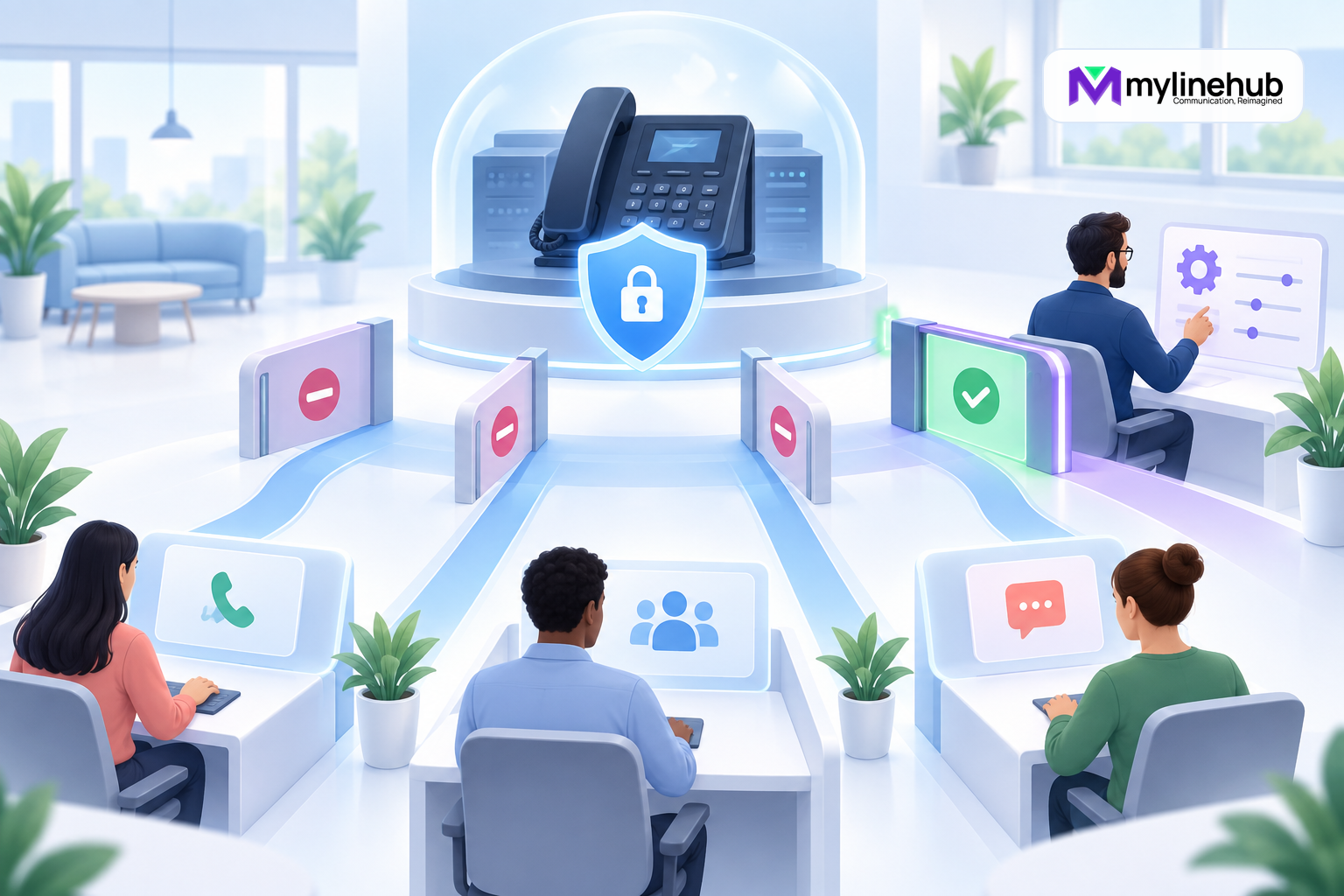
Making every MYLO user an Administrator may feel convenient, especially in a small office. It removes permission questions in the short term. It also means that a campaign operator, new employee or compromised account may be able to manage users, reach protected settings or approve changes that affect every caller.
A better rule is simple: give each person the access needed for their normal responsibility, and no more. This is not enterprise bureaucracy. It is a practical way to prevent accidental disruption, keep customer information within the right team and make important decisions traceable.
Least necessary access in plain language
“Least necessary access” means starting with the job to be done. A person monitoring outbound campaigns needs campaign pages and reports. A person configuring a new IVR needs the supported configuration journey and evidence. The owner managing accounts and approving high-impact changes needs administrative control. These needs are different.
The rule does not prevent people from working. It removes unrelated power. If responsibilities change, an Administrator can grant a suitable role or page and later remove it. That is safer than leaving broad access in place indefinitely because it was once useful.
MYLO should enforce access in the backend as well as in navigation. A hidden menu alone is not protection. The configured role, page assignment and action authorisation decide whether a request may proceed.
Administrative mistakes affect real calls
Telephony is operational infrastructure. Changing a trunk, endpoint, inbound route or IVR can affect how customers reach the business. Starting or resuming a campaign can place many calls. Rotating a credential can disconnect a device. Creating or disabling a user changes who can operate the system.
MYLO reduces these risks with proposals, approval, pre-change snapshots, deterministic validation and verification. Those controls are strongest when the approving account belongs to a person responsible for the effect. If everyone is an Administrator, the interface cannot meaningfully separate routine work from owner-level decisions.
Broad access also makes an innocent click more costly. A Dialer User who only needs Pause and reporting should not be one screen away from changing telephony configuration. A Configuration Agent should not need user-management power merely to inspect Asterisk state and prepare a proposal.
Campaign control deserves a defined boundary
Campaigns combine customer data, caller identity, capacity, pacing, retry rules and real outbound calls. The deterministic dialer manages those mechanics, but people still decide which approved campaign may start or resume. That authority should be assigned deliberately.
A Dialer User can operate the campaigns required for work without becoming a system administrator. Depending on policy, the user may prepare a lead file, monitor progress, pause new work and review outcomes. Campaign creation, a representative functional test and Start approval remain distinct steps.
This separation protects against two opposite failures: a user accidentally starting an unready campaign, and a technical administrator becoming the only person who can perform ordinary dialer work. Roles keep operational access close to the team while reserving consequential control for the correct approver.
User management should remain accountable
An Administrator can create or disable users, assign roles and influence what pages they can reach. If every account holds that authority, one user may expand another user’s access—or their own—without the intended review. Departed staff and temporary contractors become harder to contain.
Use named accounts rather than sharing an administrator password. Individual accounts make it possible to attribute proposals, approvals, campaign actions and access changes. Disable access promptly when a person leaves or no longer performs the role. Establish a recovery route for the primary administrator so the business does not respond to a forgotten password by distributing one shared credential.
User records and permissions are MYLO-owned state. They should be managed through the supported interface and deterministic authorisation, not by asking an AI assistant to ignore the role model or by changing the database informally.
Broad access increases security impact
If a normal user’s password is phished or reused elsewhere, the attacker should encounter a limited account. When every user is an Administrator, the same compromise can expose system-wide controls. Role separation therefore limits damage even when prevention fails.
Administrative access may include protected paths that ordinary users do not need, such as credential retrieval or high-impact configuration approval. SIP credentials are different from MYLO login credentials and should remain outside chat, AI prompts, ordinary logs and attachments. The fact that an Administrator can use a protected retrieval function is not a reason to display secrets to all users.
Privacy benefits too. Lead records, recordings, call history and system evidence may have different audiences. A person who needs one campaign should not automatically see every customer dataset or technical secret on the appliance.
Role separation improves the audit trail
An operation record is most useful when it shows who requested a change, who approved it, what deterministic code executed and which evidence proved the result. Shared or universally privileged accounts make that story ambiguous.
Separation does not mean that two people are mandatory for every harmless action. Reading current status or viewing an authorised report can remain routine. Approval should follow effect: configuration mutation, campaign Start or Resume, credential rotation and other consequential actions deserve a deliberate decision; ordinary observation should not be burdened unnecessarily.
When one small-business owner fills multiple responsibilities, named steps still matter. The owner can act as both Configuration Agent and Administrator, but MYLO should record when the person moved from preparing a proposal to approving its effect. This preserves clarity without pretending the business has a large security department.
A small-team example
A ten-person service office has an owner, an operations supervisor and four calling agents. The owner becomes the primary Administrator and assigns a recovery administrator. The supervisor receives Configuration Agent access for supported IVR and routing work plus the campaign oversight needed for the role. The callers receive Dialer User access limited to daily campaign operation.
When the support menu changes, the supervisor gathers the requirement and reviews MYLO’s proposed difference. The owner approves the consequential configuration. MYLO takes the scoped snapshot, applies the change through deterministic services and the team makes a real inbound test call.
When a reminder campaign is ready, a caller does not change the trunk or bypass functional testing. The supervisor verifies a representative call and the authorised approver permits Start. The caller can then monitor permitted work without seeing user management or protected credentials.
The design is not elaborate, but it prevents the most common access problem: giving everyone the master key because defining three keys seemed inconvenient.
Review access periodically
Roles should reflect current duties, not the person’s first week on the system. Review access at a regular interval and whenever someone joins, changes responsibility, covers a temporary task or leaves. Pay special attention to Administrator accounts, dormant users and permissions granted for a one-time project.
A useful review asks:
- Does each user still need every visible page and available action?
- Are any accounts shared, inactive or associated with departed staff?
- Who can approve configuration changes and campaign Start or Resume?
- Who can manage users or retrieve protected information?
- Do temporary permissions have an owner and removal date?
- Can important actions be traced to an individual account?
A practical assignment rule
Choose Administrator only when the person must govern users, protected settings or high-impact approvals. Choose Configuration Agent when the person’s work is supported telephony inspection, proposal preparation and authorised change. Choose Dialer User when the person operates campaigns and reporting without general system control.
The exact pages and actions depend on the configured MYLO installation, so the role name should not be treated as a universal permission list. Confirm the actual assignment, test it with the user and keep backend authorisation aligned with the visible interface.
When in doubt, start narrower and add a justified permission. It is easier to grant a required page than to reconstruct who changed a live route from a shared all-powerful account. The result is a MYLO system that remains usable for daily work while keeping consequential decisions in responsible hands.
Signs that administrator access is too broad
Several everyday symptoms reveal over-permission. Staff use one shared login because individual accounts are inconvenient. Campaign operators can see user-management or credential controls. Former employees remain active. Nobody can say who approved a route change. A routine support question requires exposing a SIP password because the protected process is unclear.
Correct these problems incrementally. Inventory named users, identify the pages and effects each person needs, assign the closest bounded role, and test normal tasks with that account. Keep at least one recoverable administrative path, but avoid creating many dormant administrators “just in case.” Document who can approve configuration change, campaign Start and Resume.
Access reduction should not interrupt the business. Schedule the review, confirm users can still complete their responsibilities and provide a clear escalation route when a permission is genuinely missing. The aim is dependable operation, not denial for its own sake.
After the change, sample the audit history and repeat the review periodically. The expected result is simple: daily users can work without borrowing a powerful account, protected actions reach a responsible approver, and an incident can be traced to a person and operation. That is a practical security outcome for any size of team.
Continue planning
Continue with Is MYLO a PBX, an AI Agent or a Complete Appliance?; Administrator vs Configuration Agent vs Dialer User; What Information May MYLO Send to an AI Provider?. For deeper implementation context, use MyLineHub technical architecture guidance.
For a requirement outside the prepared MYLO scope, discuss the exact outcome with MyLineHub.
Want to see API-driven CRM + Telecom workflows in action? Try the WhatsApp bot or explore the demos.
Comments (0)
Be the first to comment.