How to Make Sure Your Business Data Always Remains Yours
A practical guide for businesses on protecting data ownership—why trusting the right technical partner, choosing stable software, and using on-premise deployment ensures long-term data security.
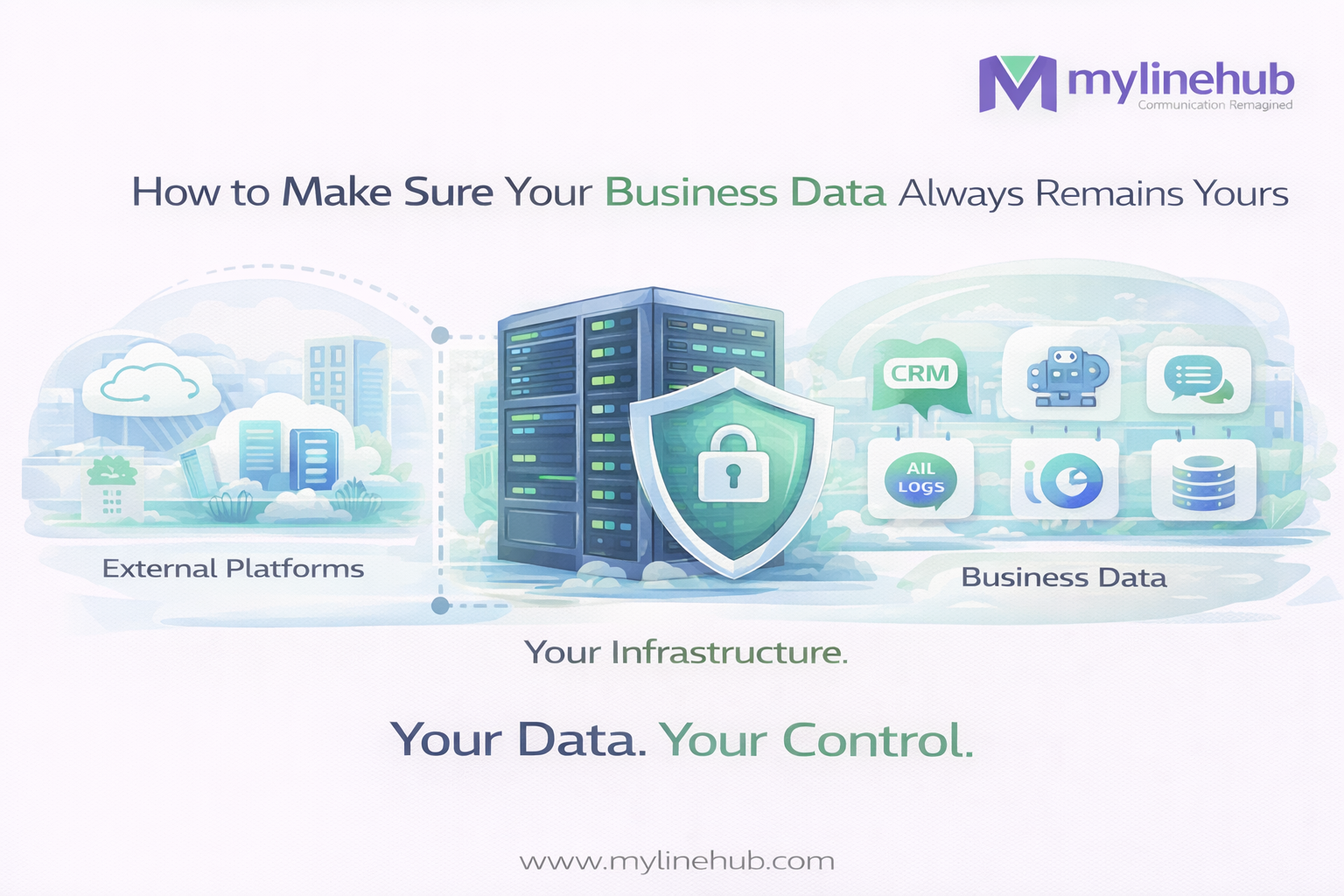
Every growing business eventually reaches a point where software is no longer optional. CRMs, calling systems, automation tools, analytics — all of them touch sensitive business data.
And with that growth comes a critical question: How do you make sure your data always remains yours?
The Real Pain Area: Loss of Control Over Data
Most businesses do not lose data because of hacking. They lose control because of:
- Black-box software platforms
- Cloud tools with unclear data boundaries
- Too many vendors touching the same data
- No technical ownership or internal visibility
Even when NDAs are signed and assurances are given, many businesses still feel uneasy — and rightly so.
Why Trust Alone Is Not Enough
Most cloud platforms promise data security. Many sign NDAs and follow compliance frameworks.
But from a business perspective, the concern remains:
- Where exactly is the data stored?
- Who technically has access?
- What happens if the vendor changes terms?
- What if the platform shuts down or is acquired?
These are not emotional concerns — they are operational risks.
The Practical Answer: Tie Up With a Sensible Technical Partner
Businesses that truly protect their data follow a simple rule:
They work with technical partners, not just software vendors.
A sensible technical partner:
- Understands your business model
- Explains what is possible and what is not
- Builds systems you can own and operate
- Does not lock you into hidden dependencies
If you are GST-registered and running a serious operation, this approach matters far more than flashy features.
Second Requirement: Stable, Proven Software
Data safety is not just about where software runs — it is also about how mature the software is.
Stable systems have:
- Clear data structures
- Defined access controls
- Audit logs
- Predictable behavior
Experimental or opaque tools increase risk, even if they look powerful on the surface.
The Strongest Control Layer: On-Premise Setup
For businesses with high security sensitivity, on-premise deployment remains the most reliable option.
In an on-premise setup:
- Data stays inside your infrastructure
- Access is controlled by your internal team
- No third-party platform can mine or reuse data
- Compliance becomes simpler and verifiable
This is why many regulated and process-driven businesses still prefer on-premise systems.
What About Cloud?
Cloud is not inherently unsafe. Many cloud deployments are secure and well-managed.
In professional setups:
- NDAs are signed
- Data integrity clauses are enforced
- Access policies are defined clearly
Yet, despite all this, some businesses still feel uncomfortable — especially when customer data, call recordings, or internal processes are involved.
That discomfort is not wrong. It simply means the business needs stronger control.
Why This Approach Works
When you combine:
- A sensible technical partner
- Stable, understandable software
- An on-premise or controlled deployment
You remove uncertainty from the system.
Instead of wondering “Where is my data?”, you know exactly where it is and who controls it.
Key Takeaway
Data security is not achieved by promises alone. It is achieved through ownership, clarity, and architecture.
Businesses that take data seriously do not chase shortcuts. They invest once, set things up correctly, and build systems that remain safe as they scale.
In today’s environment, that approach is not extreme — it is simply responsible.
Want to see API-driven CRM + Telecom workflows in action? Try the WhatsApp bot or explore the demos.
Comments (0)
Be the first to comment.