Should Your IVR Offer Multiple Languages?
An IVR should offer multiple languages when a meaningful share of callers cannot comfortably complete the menu in one language and the business can maintain an equivalent experience in every offered language.
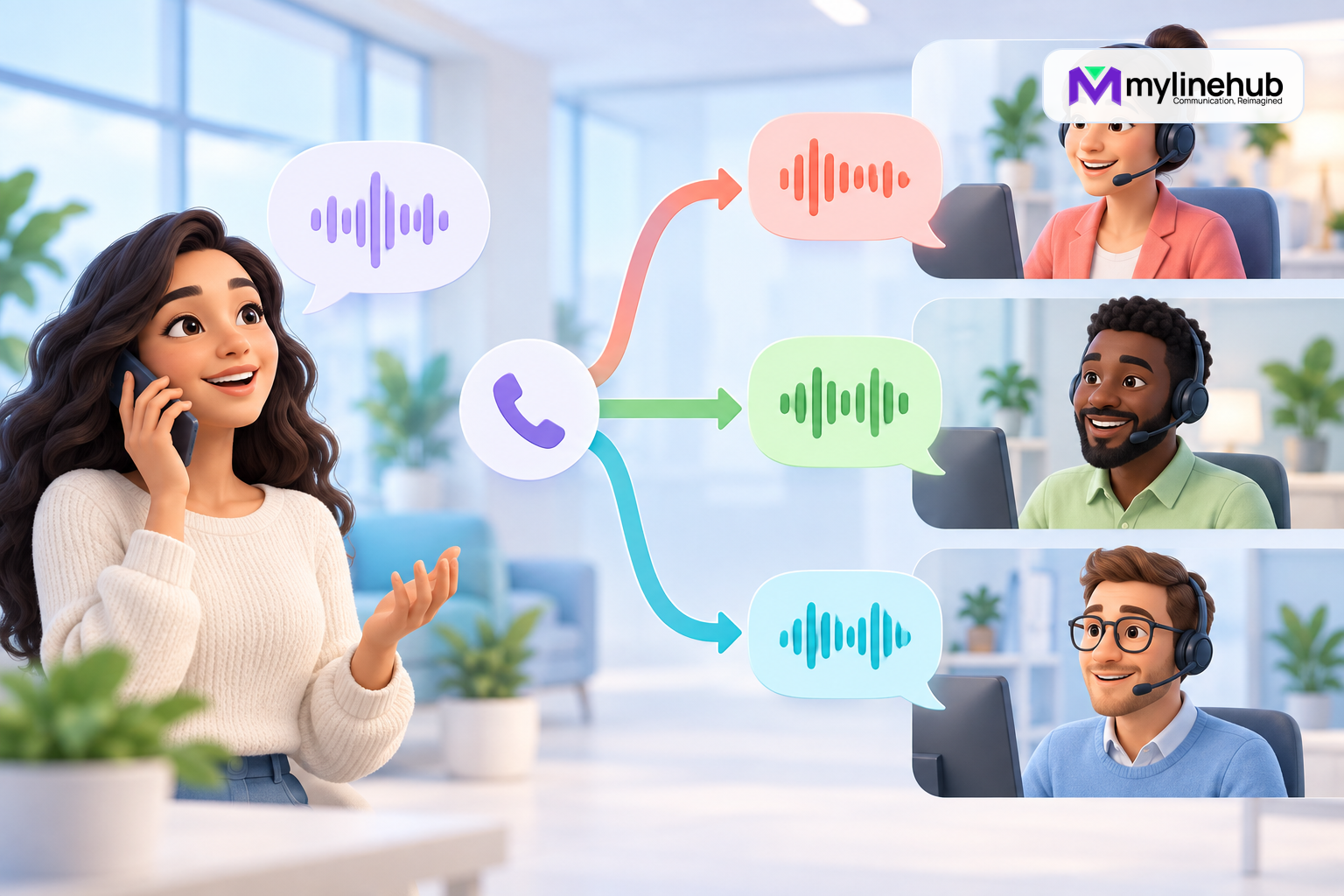
An IVR should offer multiple languages when a meaningful share of callers cannot comfortably complete the menu in one language and the business can maintain an equivalent experience in every offered language. Adding “press 2” is technically simple compared with the operational work behind it: prompts must be translated accurately, routes must remain aligned, agents or fallback channels must support the selected language, and every later change must be applied consistently. A small business should base the decision on caller evidence, not appearance. Two well-maintained language paths are better than five incomplete ones. MYLO can help structure an approved routing proposal, but the business remains responsible for translations, staffing, customer notices, and keeping all versions current. Test each path with real speakers and real external calls before publishing it.
Begin With the Customer Profile
Review who actually calls, which languages they use, where misunderstandings occur, and which calls matter most. Useful evidence includes receptionist notes, missed-call follow-ups, support records, location demographics, and direct customer feedback. Do not infer language solely from a phone number, surname, or geography. Give the caller a choice.
Ask whether the language barrier prevents callers from reaching a destination or merely changes the preferred greeting. A clinic serving two established communities may need full mirrored menus. A specialist supplier whose callers share one working language may gain little from duplication. A retailer may need a bilingual welcome but route both choices to the same multilingual reception team.
Place Language Selection Early
If a caller must understand a long announcement before choosing a language, the design has already failed its purpose. Keep the business identification brief, then present language choices using recognisable words spoken in the relevant language. Avoid a long list. Each extra choice increases listening time for everybody.
Decide whether language selection comes before notices such as recording information. The correct placement depends on what must be understood before the call continues. The business should obtain appropriate advice for its obligations and ensure the notice is understandable to the intended audience. This article is operational guidance, not legal advice.
Make the no-input path safe. It might repeat the choices, use the most commonly supported language, or reach reception. Do not silently guess a language and bury the caller in an unfamiliar submenu.
Build Duplicated Routes Deliberately
A language branch can lead to a translated copy of the same menu, a dedicated language team, or a shared destination with language context attached. The design should make that choice explicit. If both paths ultimately ring the same employees, agents need to know which language the caller selected. If staffing differs, define busy, unavailable, closed, and overflow behaviour for each team.
Equivalent does not always mean word-for-word identical. A translation should preserve the purpose and action of every prompt while sounding natural. Key numbers should normally remain aligned across languages; “sales is 1” in one path and “sales is 3” in another increases training and maintenance risk. Exceptions should be documented.
When more than one menu level is required, draw both trees side by side. The principles in How a Multi-Level IVR Works still apply: limit depth, handle invalid input, and preserve an escape route.
Plan Prompt Translation and Recording
Use a translator who understands the business context. A literal translation can change meaning, formality, or service terminology. Have a second competent speaker review the script and a representative caller listen to the recorded version. Record related prompts with consistent pronunciation, pace, and volume.
Create one source register containing prompt ID, destination, approved text, language, reviewer, recording version, and effective date. When the business adds a department or changes hours, the register should reveal every affected recording. The writing and audio checks in How to Write Better IVR Greetings and Voice Prompts apply to each language independently.
Account for Operational Maintenance
Every supported language multiplies ongoing work. Holiday announcements, emergency information, privacy notices, queue messages, voicemail prompts, and agent instructions may all require updates. If one version changes immediately while another waits weeks for translation, callers receive unequal or inaccurate information.
Name an owner and backup reviewer for each language. Define how urgent messages are approved and what happens when a translation is not available. A safe temporary fallback may be a short, verified statement leading to a person rather than an improvised automated translation.
Reporting should distinguish language selection from call outcome. Selection counts help with staffing, but they do not prove fluency or customer satisfaction. Review abandonment, transfer, callback, and unanswered-call patterns with care and respect applicable data rules.
A Practical Business Example
A two-location service centre learns that roughly one-third of callers ask reception to repeat menu choices in a regional language. It creates an early two-language choice. Both paths offer new-service booking, existing-job status, and reception using the same key numbers. The regional-language service route rings two trained employees first, then overflows to a bilingual receptionist. After hours, both paths explain the same callback process.
The business appoints one manager and two language reviewers. Before release, they call the published number from different mobile networks, test every key, wait through no-input and invalid-input handling, and verify the language indicator shown to staff. They also test what happens when the two trained employees are busy.
This is more than adding recordings. The successful outcome depends on staffing, route context, and maintenance. If the business had no person able to serve the selected language, the menu could create a promise it cannot fulfil.
Fallback Choices When Full Duplication Is Not Practical
- Route the language choice to a bilingual receptionist rather than translating a deep tree.
- Offer a callback owned by a qualified employee during defined hours.
- Publish separate numbers only when their cost and operational separation are justified.
- Use a short informational recording for a narrow purpose, followed by a staffed route.
- Start with the two highest-value routes and expand only after measuring use.
Automated speech or translation tools may assist preparation, but the business should not treat unreviewed output as an approved customer-facing message. Human review is especially important for safety, money, health, contractual, or personal-data matters.
Limits and Responsibilities
MYLO can support the approved call structure within its product boundary. Asterisk executes the live routing, the telecom provider supplies the number and trunk, and the customer supplies correct prompts, authorised staff, schedules, and operating decisions. Language availability does not guarantee that every agent is fluent or that every external service supports the same languages.
The business must manage accessibility, notice, consent, privacy, employment, and sector obligations with appropriate professional advice. It must also avoid collecting more language or identity information than the service requires. A caller’s menu selection is routing context, not proof of background or preference beyond that call.
Multilingual IVR Decision Checklist
- What evidence shows a recurring language need?
- Can the business serve that language after the caller selects it?
- Will key numbers and outcomes remain aligned?
- Who translates, reviews, records, and approves every prompt?
- How will urgent and holiday messages be updated?
- What happens after no input, invalid input, busy agents, or closure?
- Have native or fluent speakers tested real calls end to end?
The next design question is capacity: What Should Happen When Every Support Agent Is Busy? explains queues, overflow, voicemail, and callback ownership. Businesses with a custom language, CRM, or multi-site requirement should ask MyLineHub to scope it rather than assume it is included in a fixed appliance package.
Measure Whether Each Language Path Works
Track selection, answer, abandonment, transfer, overflow, callback, and resolution by language path where this is necessary and appropriate. A high abandonment rate may indicate a long prompt, unavailable staff, poor translation, or a route problem. It should not be used to make assumptions about individual callers.
Compare equivalent destinations across languages. If one path consistently waits longer, the business may need different staffing, a simpler route, or a more honest fallback. Listen to a controlled sample with authorised reviewers and protect any personal information encountered during quality work.
Plan the change process
Before publishing a new service or schedule, identify every affected language asset. Translate and review the business meaning, record with consistent quality, apply the route change, and test both the changed and unchanged branches. If one version cannot be ready, decide whether to delay the release or use a verified temporary message.
Provide agents with the selected-language context, but allow callers to continue in another language if needed. Language selection is a service preference for the interaction, not a permanent personal classification. Limit storage and use accordingly.
Continue planning
Continue with How Can a Small Business Set Up an Inbound Support Number?; How to Write Better IVR Greetings and Voice Prompts; What Should Happen When Every Support Agent Is Busy?. For deeper implementation context, use MyLineHub technical architecture guidance.
For a requirement outside the prepared MYLO scope, discuss the exact outcome with MyLineHub.
Want to see API-driven CRM + Telecom workflows in action? Try the WhatsApp bot or explore the demos.
Comments (0)
Be the first to comment.