Why Scheduling Campaigns and Callbacks Is Critical for Call Center Success
Missed callbacks, illegal calling hours, and forgotten campaigns silently hurt call centers. Learn how scheduling campaigns and customer callbacks saves time, ensures compliance, and builds trust.
In call centers, most failures don’t happen because of technology — they happen because humans forget.
Missed callbacks, calling customers at the wrong time, dialing after legal hours, or stopping campaigns manually every day slowly destroy trust and productivity.
This is exactly where scheduling becomes a critical part of telecom operations.
The Real Problem Businesses Face Without Scheduling
Let’s look at common situations:
- An autodialing campaign starts in the morning
- Agents leave office at 6 PM
- Indian regulations restrict calling after fixed hours
- Managers forget to stop or restart campaigns
Without scheduling, businesses rely on manual discipline — which always fails at scale.
Scheduling Autodialer Campaigns (Work Hours + Compliance)
Scheduling allows campaigns to:
- Start automatically at a fixed time
- Pause before restricted calling hours
- Resume next working day without human intervention
This ensures:
- No illegal calls after allowed hours
- No need for manual shutdowns
- Consistent operations even when teams go home
Customer Callback Commitments (The Biggest Pain Point)
A customer says: “Please call me after 3 days”.
What usually happens?
- Agent notes it somewhere
- Paper, Excel, CRM note, or memory
- Call is forgotten or delayed
Scheduling solves this by allowing:
- Exact callback time setup
- Automatic reminder or dial trigger
- No dependency on human memory
Why Manual Reminders Don’t Work at Scale
Manual follow-ups break when:
- Agents handle hundreds of leads
- Shift changes happen
- Agents leave the organization
- Campaign volume increases
Scheduling converts promises into system-enforced commitments.
Types of Scheduling Used in Call Centers
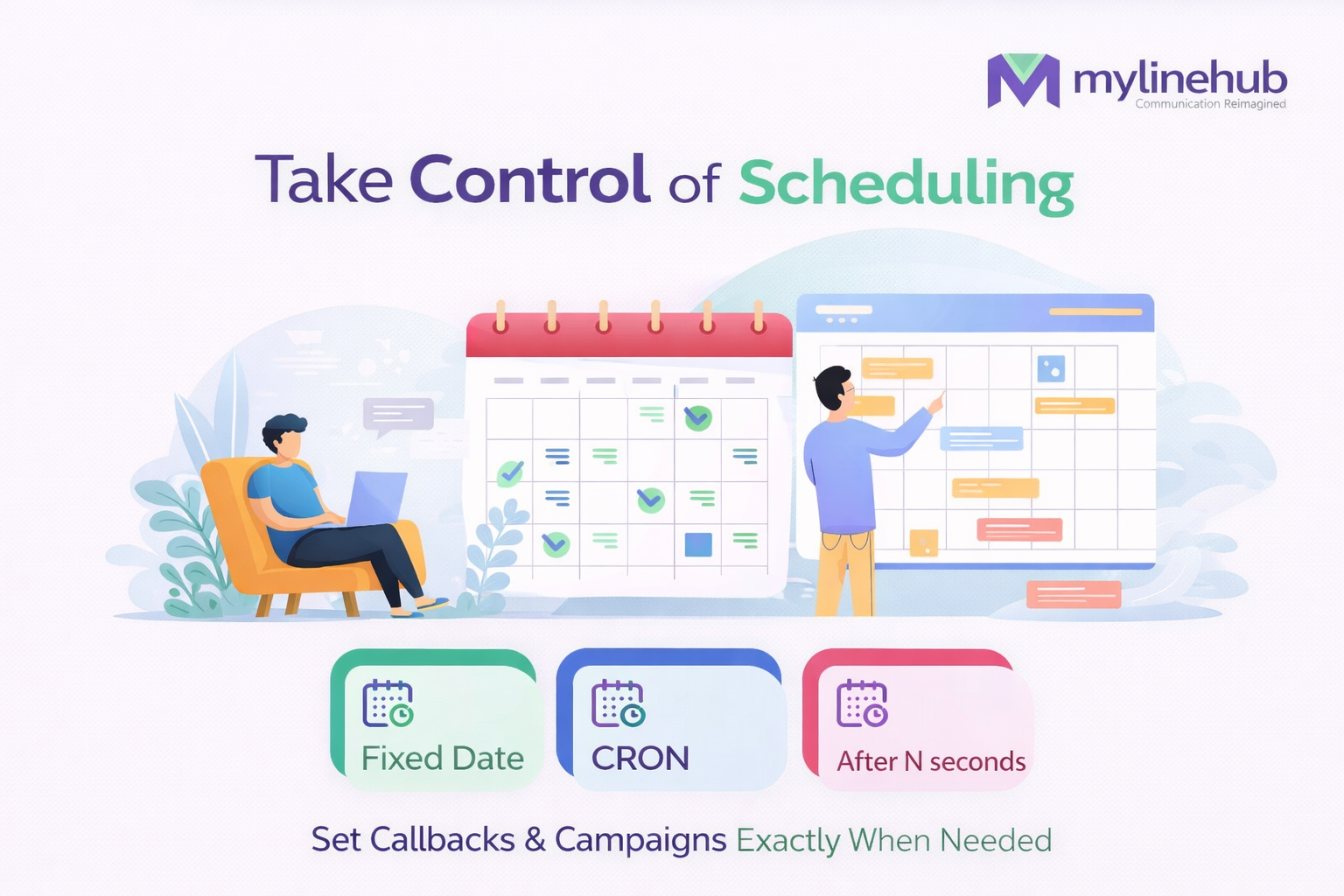
- Fixed Date Scheduling: Call on an exact date & time
- After N Time: Call after X days or hours
- CRON / Repeating: Daily, weekly, or time-window based
These methods ensure calls happen exactly when they should — not earlier, not later.
How Scheduling Saves Time & Cost
- No manual campaign start/stop
- No chasing agents for callbacks
- Lower operational stress
- Higher agent productivity
Managers focus on outcomes, not operational babysitting.
Scheduling Builds Customer Trust
When businesses call exactly when promised:
- Customers feel respected
- Conversion rates improve
- Complaints reduce
- Brand reliability increases
Scheduling is not a technical feature — it is a trust mechanism.
Scheduling Is Mandatory for Growing Organizations
Small teams may survive without scheduling. Growing organizations cannot.
As call volume increases, automation must replace memory.
Scheduling ensures:
- Compliance with calling regulations
- Zero missed commitments
- Predictable operations
- Stress-free scaling
Key Takeaway
Scheduling is not about convenience. It is about discipline, compliance, and credibility.
If your call center depends on humans to remember — it will eventually fail.
Systems don’t forget.
Want to see API-driven CRM + Telecom workflows in action? Try the WhatsApp bot or explore the demos.
Comments (0)
Be the first to comment.