How MYLO Turns Logs Into Understandable Telecom Evidence
MYLO turns logs into understandable telecom evidence by starting with a specific question, selecting a bounded time window and relevant identifiers, collecting from the authoritative layer, producing a machine-readable result, and explaining that result in business language.
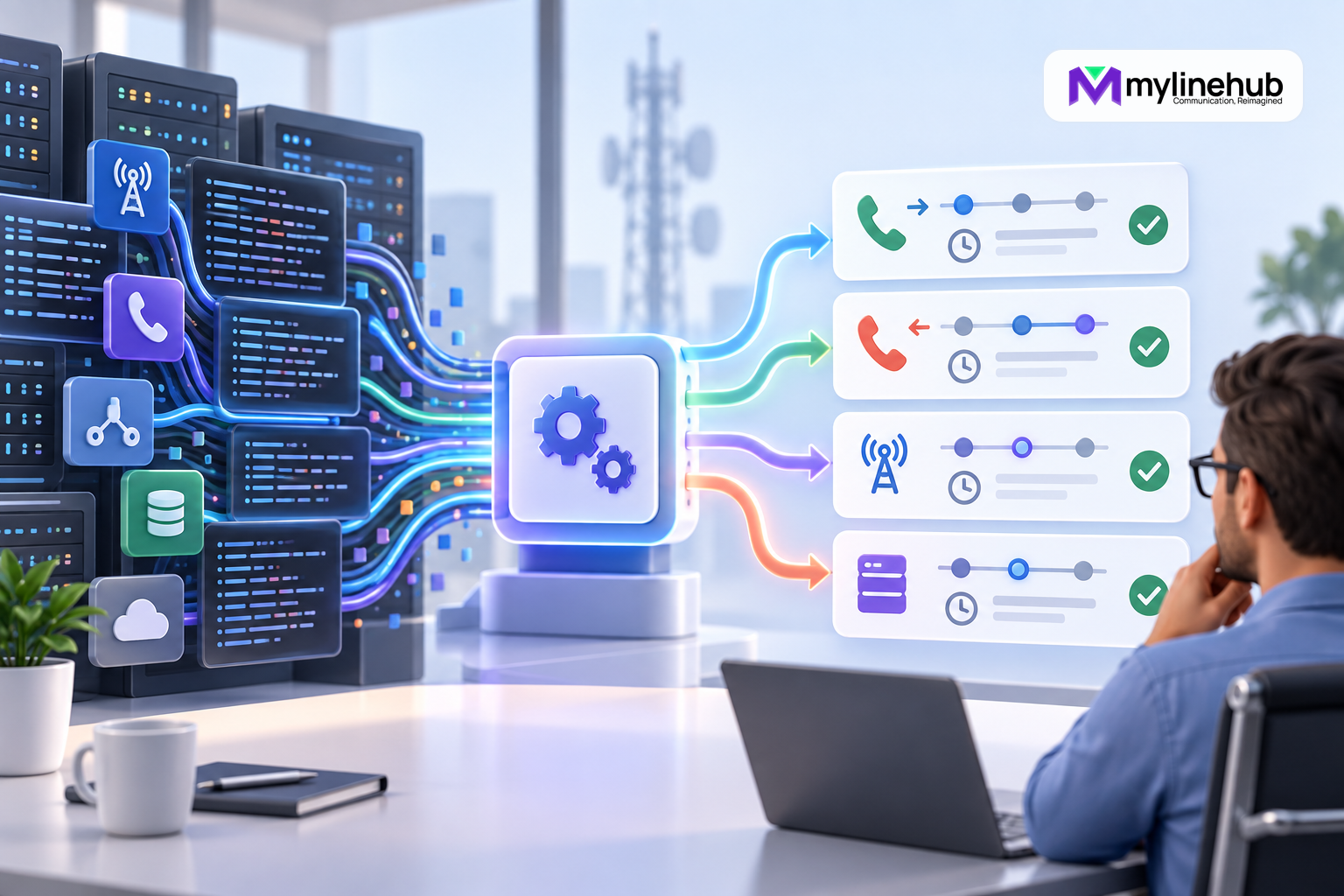
MYLO turns logs into understandable telecom evidence by starting with a specific question, selecting a bounded time window and relevant identifiers, collecting from the authoritative layer, producing a machine-readable result, and explaining that result in business language. The objective is not to paste thousands of log lines into chat. It is to preserve enough precise evidence to support a safe decision without exposing unrelated customers, credentials, or infrastructure details.
State Confidence Without Hiding Gaps
Label conclusions as observed, derived, or still unconfirmed. Name the missing source and the authorised next check. Honest uncertainty gives an operator a safer decision than a polished explanation that quietly fills absent evidence.
Make Evidence Comparable Across Incidents
Use consistent field names for observation time, time zone, call direction, provider, business number, MYLO call ID, campaign and run, customer leg, agent leg, Asterisk result, network finding, and verification result. Consistency lets a support team compare incidents without forcing unlike data into one status. Keep product versions and configuration-change references where they matter, because an explanation that was valid before an upgrade may not describe the current system.
Comparison still needs boundaries. Similar symptoms can come from different causes, and a common provider code can appear in several journeys. Use previous incidents as hypotheses and known-good examples, never as proof of current state. Collect fresh evidence from the responsible authority, explain the match or difference, and retain uncertainty until verification closes it.
Preserve a Chain From Question to Conclusion
A production evidence record should show who asked the question, the customer or system in scope, the observation window and time zone, the authorised collectors used, the identifiers followed, and the exact facts that support the conclusion. Record hashes or immutable references for exported evidence where the operating procedure requires them. Do not silently replace an earlier collection after configuration changes; create a later observation so reviewers can see what changed.
Keep the original operational values separate from labels added for a manager. For example, a provider response code, Asterisk channel result, MYLO leg outcome, and CRM disposition may all describe different layers. A plain-language sentence can connect them, but should not erase those distinctions. This lets support reproduce the explanation and lets developers improve a rule without rewriting incident history.
Turn Evidence Into a Safe Next Action
The best explanation ends with a bounded decision: collect one missing provider trace, correct one validated route, ask an authorised user to approve a proposal, retry one internal test, or monitor the next call. It should also say what not to conclude. One failed call does not prove a trunk outage; a successful registration does not prove media; a present recording file does not prove the intended parties were bridged.
After a correction, repeat the original customer journey and attach the verification result to the same incident without overwriting the failure. For recurring faults, compare structured fields across incidents rather than asking a model to find patterns in unrestricted logs. MYLO is valuable when it reduces noise while keeping evidence, uncertainty, privacy, and ownership visible. It should help a business act on telecom facts, not convert plausible language into a new source of truth.
Start With a Question, Not a Log File
“Why did the 10:32 inbound call not reach support?” is actionable. “Read all Asterisk logs” is not. The first question identifies direction, approximate time, called number, destination, and expected outcome. It allows controlled services to select relevant events and prevents a model from searching unrelated activity.
Other useful questions include whether a trunk registered, why an outbound leg was rejected, whether DTMF was received, which route executed, and whether a campaign customer or agent leg failed. Each requires a different evidence set.
Bound the Time Window
Use the narrowest window that includes the event, with time zone stated. Expand deliberately only when setup or recovery activity falls outside it. Long unbounded exports are harder to interpret, increase privacy exposure, and can hide the important sequence among routine background messages.
System clocks must be understood. Provider timestamps, application timestamps, and Asterisk logs may use different zones or formats. Normalise them in the machine result while preserving original time evidence where needed.
Correlate With Stable Identifiers
A call ID, linked channel identifier, campaign ID, run ID, lead or customer record identifier, and recording ID can connect evidence across components. Phone numbers and timestamps help locate a call, but numbers may repeat and concurrent calls can overlap. Identifiers make the relationship explicit.
Preserve separate identifiers for separate legs. In a two-leg campaign, the customer leg and agent leg can have different results while belonging to one business flow. Collapsing them into one generic “failed call” can cause an unsafe retry.
Create a Structured Machine Result
Controlled collection should produce a bounded structure: question, observation time, sources, identifiers, ordered events, relevant result codes, redactions, gaps, and confidence limits. This structure is easier to validate and audit than free-form copied text.
A machine result should distinguish fact from inference. “Asterisk recorded an inbound channel at 10:32:04” is an observation. “The provider probably had an outage” is an inference requiring provider evidence. Unknown fields should remain unknown rather than being filled with plausible language.
Explain the Evidence for a Human
MYLO can translate the structured sequence into plain language: the provider delivered the call, the inbound number matched the support route, the group rang for 20 seconds, no endpoint answered, and the call followed the approved voicemail fallback. The explanation should cite identifiers and timestamps that an authorised operator can inspect.
A useful explanation separates what worked, what failed, likely next checks, and what evidence is missing. It should not claim that a configuration change will solve the issue unless controlled current state supports that conclusion.
Use AI as an Explanation Layer
A language model can summarise patterns and adjust technical detail for the reader, but it should receive sanitised, question-relevant context rather than unrestricted raw logs. Deterministic collectors enforce scope and protect excluded values. Credentials and secrets remain local.
The explanation never becomes telephony truth. Asterisk and live operating-system evidence remain authoritative. If the model statement conflicts with structured evidence, the system should show the evidence and stop consequential action.
Evidence Workflow Checklist
- State the operational question and expected behaviour.
- Identify direction, time zone, numbers, and known call ID.
- Collect only from the relevant bounded time window and authority.
- Correlate call, leg, campaign, event, and recording identifiers.
- Redact secrets and exclude unrelated customer activity.
- Separate observations, inferences, missing evidence, and next checks.
- Verify any correction through the real external call path.
Continue planning
Continue with Is MYLO a PBX, an AI Agent or a Complete Appliance?; What Happens When the SIP Trunk Stops Working?; What Is the MYLO Call-Event History?. For deeper implementation context, use MyLineHub technical architecture guidance.
For a requirement outside the prepared MYLO scope, discuss the exact outcome with MyLineHub.
Want to see API-driven CRM + Telecom workflows in action? Try the WhatsApp bot or explore the demos.
Comments (0)
Be the first to comment.