What If MYLO Makes a Change and I Want to Go Back?
Telephony changes should not leave a business without a recovery path. Understand MYLO's backup and restore approach from the customer's point of view.
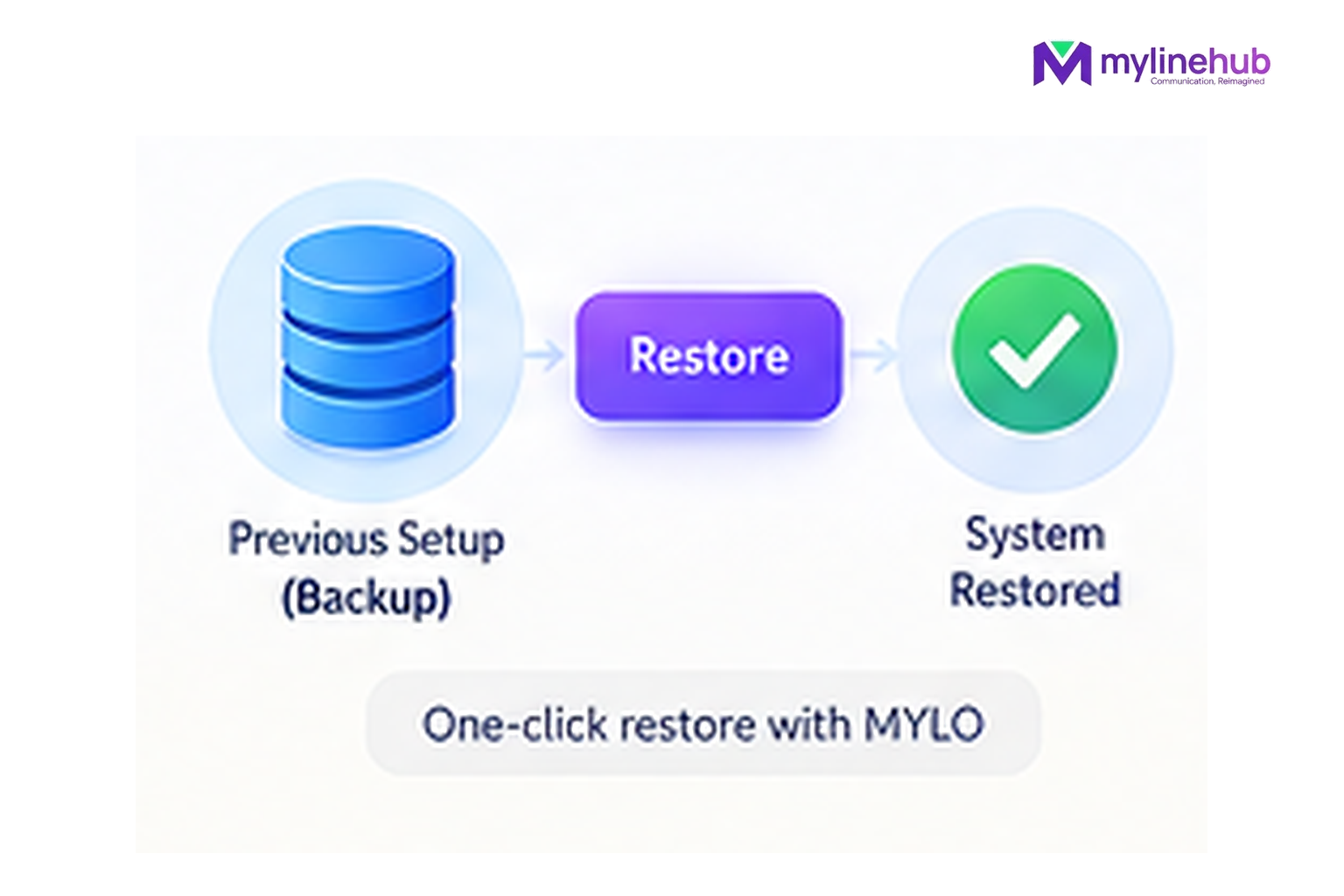
MYLO v0.35 has a controlled backup and restore architecture for Asterisk configuration changes. The practical business idea is that a consequential change should have a known recovery path rather than leaving the customer to remember which lines were edited manually.
Quick answer
- Start from the business outcome; MYLO uses conversation to gather or clarify the information it needs.
- Consequential telephony work stays inside the product's permissions, validation and approval boundaries.
- The telecom provider remains responsible for public numbers, carrier service, capacity and provider-side conditions.
Recovery is part of the change story
Backup Happens as Part of the Change Pipeline
The backup capability is not meant to be an optional afterthought after the system has already changed. v0.35 uses backup manifest v2 and operation/backup metadata around the approved configuration pipeline. The product can package signed backup material for portability as well.
Restore Is Controlled Too
Restore is itself a protected operation. The telephony tool registry marks backup/restore mutation functions as approved-pipeline-only, preventing a chat/tool call from bypassing the same safety boundary used for normal configuration changes.
A Restore Is About Telephony Scope, Not the Entire Computer
The backup/restore path protects the approved Asterisk configuration scope associated with the operation. It should not be marketed as a full bare-metal image of Ubuntu, every application file or every telecom-provider system. That distinction keeps the promise precise.
The existing article What does the MYLO Restore button actually restore? explains the scope in more depth.
Recovery Still Ends With Verification
Going back to a previous configuration is not complete until the service is reloaded and the relevant behaviour is verified. If the original failure was actually caused by the provider or network, restoring a file may not fix it; MYLO’s evidence path helps distinguish those cases.
Continue From Here
Custom Requirements and Telecom Responsibility
MYLO configures and operates the customer's local telephony layer; it is not the telecom carrier. Numbers, trunk service, calling charges and provider-side permissions remain with the customer's telecom provider. Where a requirement sits outside the standard MYLO package, MyLineHub can discuss it as a Custom Requirement.
Customisation does not override telecom-provider conditions, customer-consent obligations or applicable Indian telecom requirements. The final calling design must use services and number-routing methods that the business is permitted to use.
Want to see API-driven CRM + Telecom workflows in action? Try the WhatsApp bot or explore the demos.
Comments (0)
Be the first to comment.