What Happens to a Campaign After the Appliance Restarts?
After a MYLO appliance restarts, an unfinished campaign should not silently begin dialling again. The system restores persisted campaign state, reconciles work that may have been active during interruption, and presents the campaign in a paused recovery condition.
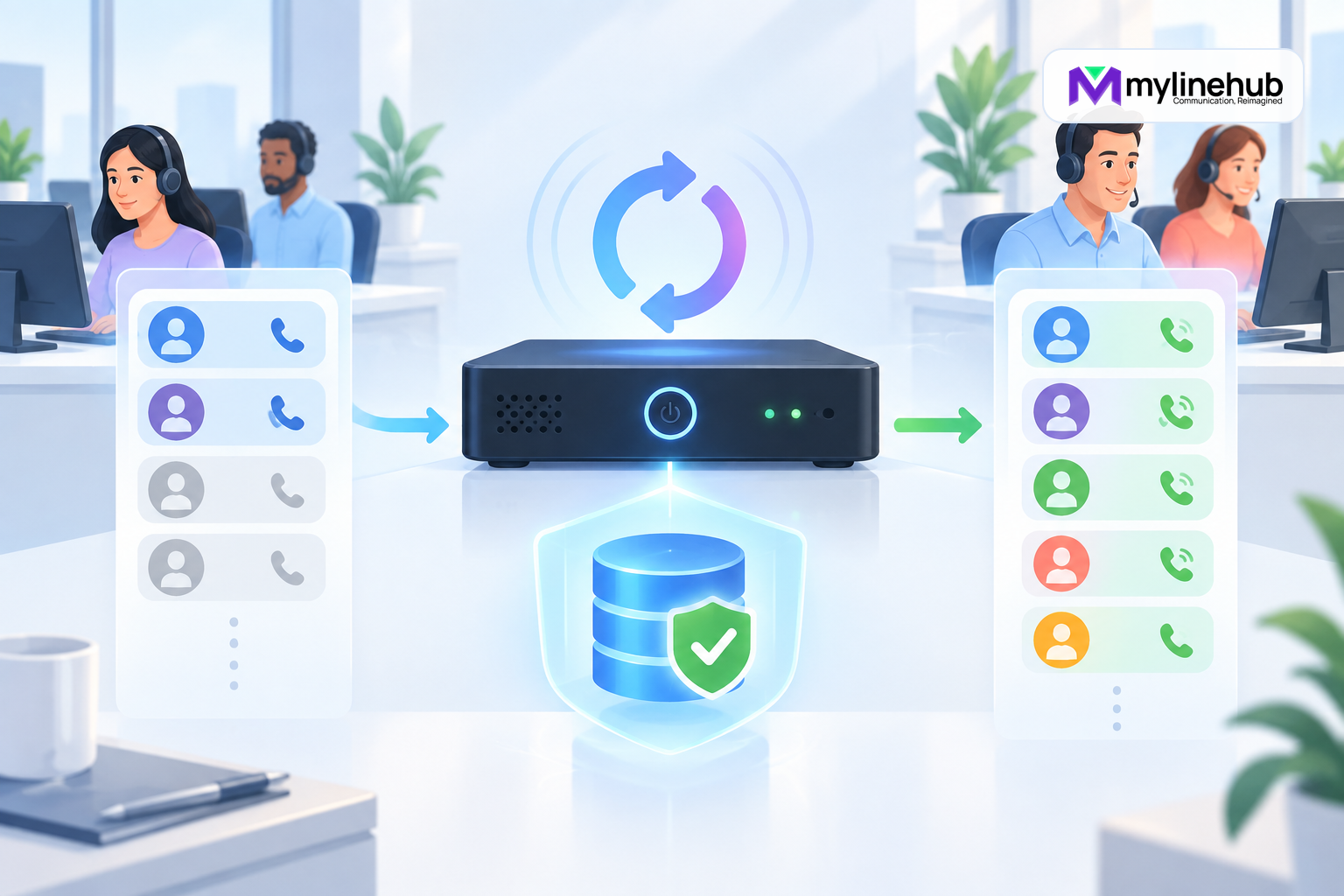
After a MYLO appliance restarts, an unfinished campaign should not silently begin dialling again. The system restores persisted campaign state, reconciles work that may have been active during interruption, and presents the campaign in a paused recovery condition. An authorised person reviews the evidence and operating environment before approving Resume. Safety and accurate customer treatment take priority over recovering throughput automatically.
Persisted Progress Survives the Process
Durable campaign state should show which leads reached final outcomes, which remain pending, which have used an attempt, which retain an approved retry, and which call flows were active near interruption. The original approved campaign type, agent set, pacing, caller-ID policy, recording decision, and relevant configuration relationships must remain identifiable.
Restart recovery must not reconstruct progress from a simple row counter alone. Several agents may have independent work and pacing. A lead near the interruption may have provider or Asterisk events that need reconciliation before its next action can be decided safely.
No Automatic Redial
Starting new calls immediately after boot creates multiple risks. The restart may have occurred during closed hours, agents may not be ready, a provider or network dependency may still be unavailable, and an interrupted customer could be called twice. Automatic resumption can also conceal the incident from the operator.
MYLO therefore recovers into a reviewable paused state. Pending leads remain pending. Final leads remain final. Records near an ambiguous boundary do not return automatically to the front of the queue.
Reconcile Ambiguous Active Work
The recovery process should compare persisted state with authoritative telephony evidence. A call may have failed before origination, rung without answer, connected and ended, or remained uncertain when application state stopped updating. Asterisk and provider evidence, event timestamps, and deterministic state rules help distinguish those cases.
An uncertain result should be surfaced for controlled review rather than guessed into retry eligibility. In particular, evidence that the customer answered must not be rewritten as no answer merely because the agent connection or application process failed afterward.
Review the Environment Before Resume
The operator should confirm that the restart cause is understood or acceptably contained, Asterisk and required services are healthy, the provider trunk is available, expected caller IDs remain authorised, agents are present, endpoints work, channels are sufficient, and current time falls within the approved window. Check any recording requirement and storage condition as well.
Place a representative functional test when the incident could have affected signalling, media, endpoints, or state handling. Confirm the selected two-leg or IVR path, events, and two-way audio. A healthy dashboard alone does not prove that the external call chain recovered.
Resume From Reconciled State
After review, an authorised human can approve Resume. Deterministic scheduling continues from eligible persisted work while respecting per-agent pacing and capacity. It does not redial final records, reset attempts, or create a catch-up surge.
Preserve restart, recovery, reconciliation, approval, and subsequent result events for audit and diagnosis. The campaign owner should be able to explain how many records were final before interruption, how ambiguous work was handled, and what evidence supported resume.
Prepare Recovery Before an Outage Occurs
The campaign owner should document restart roles, evidence sources, provider contacts, test numbers, and resume authority before launch. Operators need to know how to distinguish an appliance restart from a provider outage, endpoint problem, power event, or network failure. Recovery is slower and riskier when these decisions are invented after customers may already have received calls.
Power protection and orderly shutdown reduce interruption risk but do not remove the need for durable state. Backups should cover MYLO-owned configuration and records under the product’s supported process, and restoration should be tested in an appropriate environment. A database copy without a verified restoration procedure is not a recovery plan.
After restart, compare campaign counters with detailed lead and event state rather than accepting a total at face value. Sample records around the interruption boundary, including each active agent lane. Confirm that a completed call is not pending, a customer answer is not reclassified as no answer, and an unused lead has not acquired an attempt.
Communicate the paused recovery condition to operational staff. Agents should not manually dial pending campaign records while reconciliation occurs, because that creates contact outside the preserved state. Resume only through the approved authoritative path, then observe the first few outcomes for duplicate or pacing anomalies.
Review the Cause, Not Only the Symptoms
Record whether the restart was planned, caused by power loss, triggered by an application failure, or part of an operating-system event. The cause determines which evidence and dependencies need extra scrutiny. A planned upgrade may require version-specific regression tests; a power event may require network, provider-device, storage, and clock checks.
Do not delete ambiguous events merely to make campaign totals reconcile. Preserve the exception, assign a reviewer, and document the decision supported by available evidence. Honest uncertainty is safer than a fabricated final status that could trigger duplicate customer contact.
Restart Recovery Checklist
- Restore durable campaign configuration and lead-level progress.
- Keep the recovered campaign paused; do not redial automatically.
- Reconcile active-boundary work against telephony evidence.
- Do not turn uncertainty or agent failure into customer no-answer.
- Verify provider, services, endpoints, agents, channels, hours, and media.
- Require authorised human approval before deterministic resume.
Recovery Ends Paused, Not Dialling
Restart recovery originates zero calls. MYLO inspects persisted progress, preserves proven completed work, releases stale reservations and avoids blindly redialling customers whose outcome is uncertain. The campaign ends in PAUSED, the user is notified, and an explicit Resume approval is required before any new outbound attempt.
Continue planning
Continue with Five Ways MYLO Connects Agents and Customers; How Pause and Resume Work in a MYLO Campaign; Why Every Campaign Needs a Functional Test. For deeper implementation context, use MyLineHub technical architecture guidance.
For a requirement outside the prepared MYLO scope, discuss the exact outcome with MyLineHub.
Want to see API-driven CRM + Telecom workflows in action? Try the WhatsApp bot or explore the demos.
Comments (0)
Be the first to comment.