How Pause and Resume Work in a MYLO Campaign
Pause tells a MYLO campaign to stop starting new work while allowing already active calls to reach a controlled outcome. The campaign then preserves its position, attempt history, retry eligibility, and active-call results.
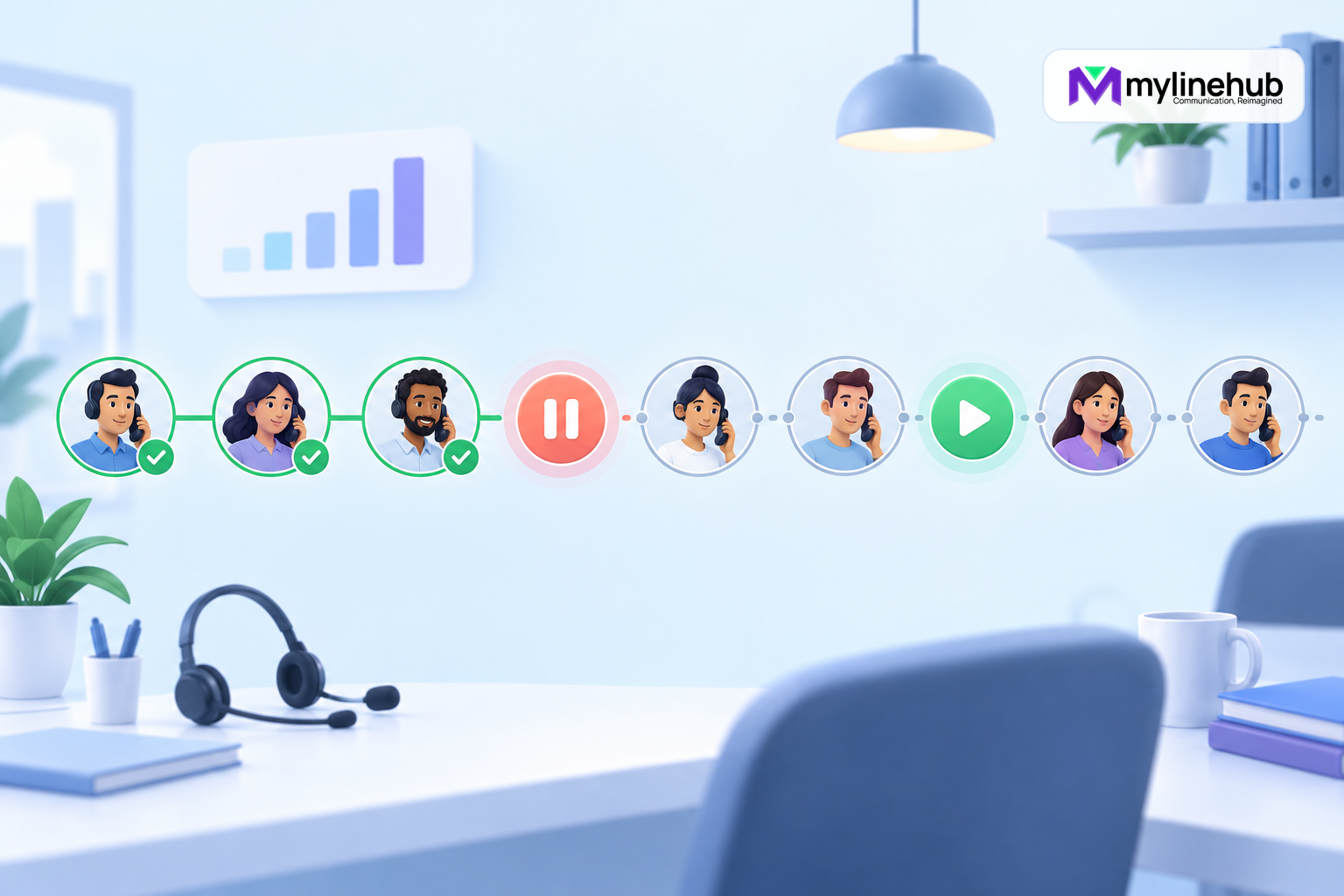
Pause tells a MYLO campaign to stop starting new work while allowing already active calls to reach a controlled outcome. The campaign then preserves its position, attempt history, retry eligibility, and active-call results. Resume is a separate human-approved action that continues from persisted state after the operator reviews readiness. MYLO uses Start, Pause, and Resume because “stop” can ambiguously mean temporary suspension, final cancellation, or abrupt termination of live customer calls.
Pause Stops New Work
When an authorised operator pauses a running campaign, deterministic scheduling should stop reserving new agents and originating new first legs. Leads that have not begun remain pending in their existing order and state. The pause request should be timestamped and attributable so supervisors know when and why new work stopped.
Pause is useful when the business detects incorrect wording, a provider issue, unexpected customer feedback, agent shortage, data concern, or another condition requiring review. It is a control action, not a way to erase events already produced.
Active Calls Need Controlled Handling
A call already in progress should not be torn down merely because new scheduling paused. Allow an active customer-agent conversation to end normally. A two-leg flow that has begun should reach a defined result under the supported state machine, and its events should be committed.
The operator needs visibility into remaining active work so “paused” is not mistaken for “nothing is happening”. If a technical or safety incident requires immediate termination, that is a distinct exceptional procedure with appropriate authority; it should not be hidden behind ordinary pause semantics.
Persist Position and Attempt State
The campaign must preserve which leads are final, pending, actively reconciling, or eligible for one approved retry. Agent assignments, per-agent pacing clocks, and relevant results also need consistent state. A pause must not put completed leads back into the queue or reset an attempt counter.
Reporting at the pause boundary should show offered work, active work, completed outcomes, pending records, and exceptions. This snapshot gives the operator a reliable basis for reviewing the problem and deciding whether resume is appropriate.
Resume Requires Review and Approval
Resume should not occur merely because a timer expired or the application restarted. An authorised person checks provider health, available agents, approved hours, lead eligibility, caller-ID availability, recording policy, and the reason for the pause. MYLO can present structured state and evidence, but a human makes the consequential resume decision.
Deterministic services then continue from persisted position. They should not rebuild the campaign from the original upload or originate a burst of work to “catch up”. Per-agent pacing and capacity rules still apply after resume.
Natural Completion Is Not Pause
A campaign naturally completes when no eligible new or retry work remains and all active flows have reached final outcomes. That state is different from paused, where unfinished eligible work remains by design. The distinction helps reporting, restart recovery, and user decisions.
If the business needs permanent cancellation or archival, that should be a separately defined lifecycle action with clear consequences. Using the word “stop” for both temporary pause and irreversible cancellation invites dangerous assumptions about pending leads and active calls.
Use Pause as Part of a Written Incident Procedure
Define who may pause, how the reason is recorded, who is notified, and what evidence must be reviewed before resume. Front-line operators may need authority to stop new work quickly, while only a campaign owner or supervisor may approve the restart. The permission model should reflect business risk and remain understandable during an incident.
Common pause triggers include an incorrect prompt, unauthorised caller ID, unexpected complaint pattern, wrong audience, agent group failure, provider instability, one-way audio, recording-policy failure, or an instruction from compliance leadership. The operator should choose a clear reason code and add concise facts without copying unnecessary customer information.
During pause, reconcile external changes. A recipient may have opted out, an appointment may have been cancelled, or a lead may have been corrected in the source system. Define how those updates reach pending work before resume. Persisted order is important, but it must not override a newer suppression or eligibility decision.
After resume, monitor the first few controlled outcomes and compare them with the test evidence. If the original fault returns, pause again and escalate rather than repeatedly toggling state. Preserve both pause episodes so later review shows the real chronology.
Communicate Campaign State Clearly
The interface and operating handover should distinguish “pause requested”, “draining active calls”, “paused”, “resume requested”, “running”, and “completed”. These labels prevent an operator from assuming that a pause click immediately ended every live conversation or that a resume click has already originated work.
Share the state with agents and supervisors through the approved internal channel. Agents should not place manual substitute calls while the campaign is paused, and supervisors should not interpret a stable pending count as a system failure. Clear state language keeps human actions aligned with deterministic execution.
Pause and Resume Checklist
- Stop scheduling new work when pause is accepted.
- Let active calls reach controlled outcomes and persist their events.
- Preserve lead position, attempts, retries, assignments, and pacing state.
- Review the cause and operational readiness before resume.
- Require an authorised human to approve resume.
- Keep paused, naturally completed, and permanently cancelled states distinct.
Continue planning
Continue with Five Ways MYLO Connects Agents and Customers; Why MYLO Should Not Retry a Customer Because an Agent Failed; What Happens to a Campaign After the Appliance Restarts?. For deeper implementation context, use MyLineHub technical architecture guidance.
For a requirement outside the prepared MYLO scope, discuss the exact outcome with MyLineHub.
Want to see API-driven CRM + Telecom workflows in action? Try the WhatsApp bot or explore the demos.
Comments (0)
Be the first to comment.