Customer Phone to Agent Mobile: How the Flow Works
In the customer-phone-to-agent-mobile flow, MYLO calls the customer first and, after the customer answers, calls an approved agent mobile number and connects both legs.
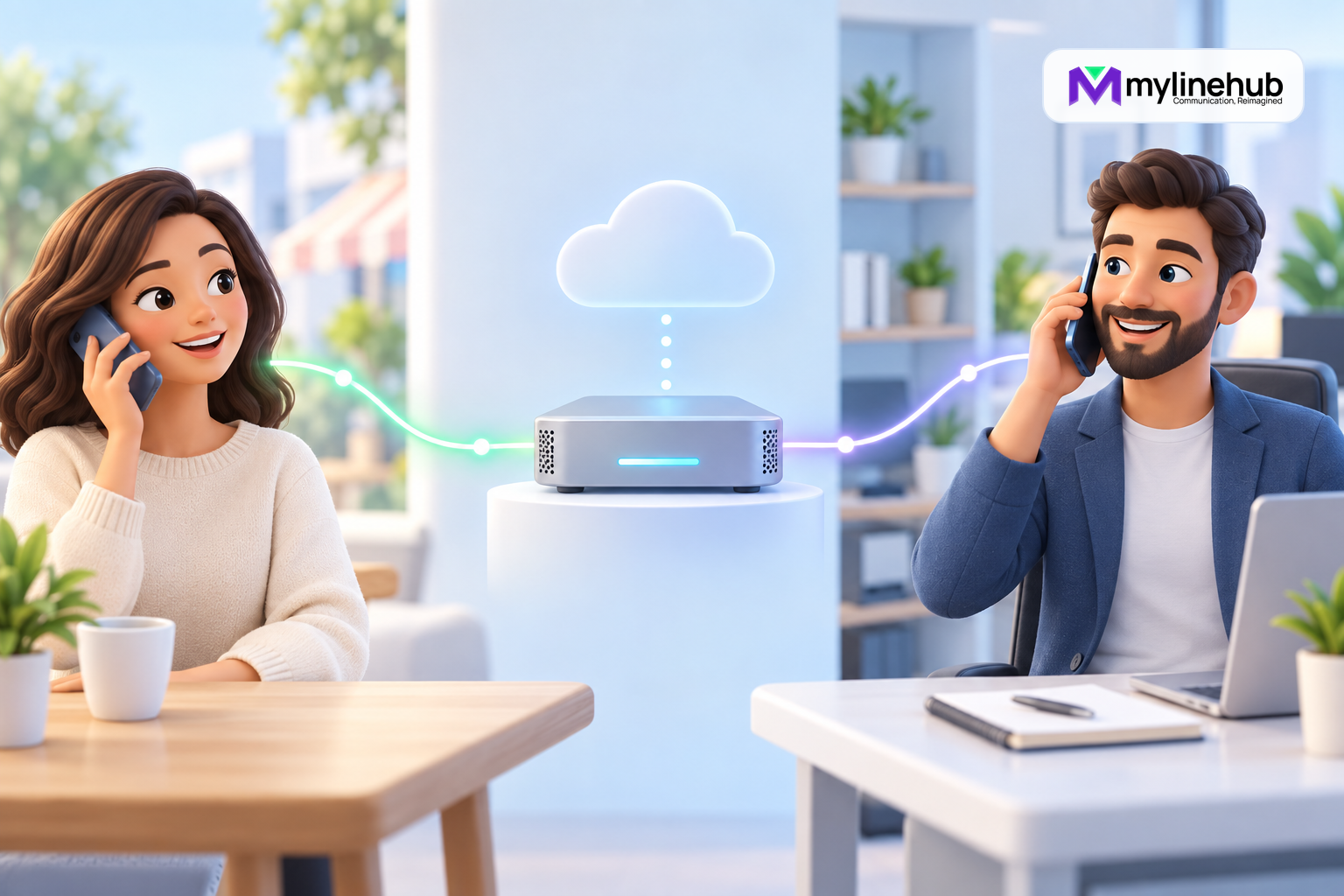
In the customer-phone-to-agent-mobile flow, MYLO calls the customer first and, after the customer answers, calls an approved agent mobile number and connects both legs. It supports remote teams without requiring the agent to manually dial from a personal phone. The design must protect the answered customer from a long or failed second-leg wait, prevent the agent's private number from becoming the public business identity, and classify each outcome correctly. It does not mean MYLO supplies mobile service or allows arbitrary caller ID. The telecom provider supplies the trunk, channels, and authorised numbers. Deterministic services control scheduling, capacity, agent assignment, retries, and origination after approval; Asterisk performs live telephony. The business owns lawful contact, agent availability, mobile destinations, recording decisions, and escalation.
The Customer Leg
An eligible lead is selected within the approved schedule and attempt policy. MYLO uses an authorised business caller ID and asks Asterisk to originate the customer call. Busy, no-answer, invalid, rejected, and answered events must remain distinct because they drive different retry or terminal outcomes.
Answer detection is evidence, not certainty about who answered. A voicemail system or another person may accept the call. The flow should use an appropriate opening and avoid disclosing sensitive information before identity is established.
The Mobile Agent Leg
After the customer leg reaches the defined answered state, MYLO originates the chosen agent mobile. The assignment must be deterministic and respect whether that agent is eligible for another active flow. A short customer-facing connection message may be used, but it must not promise that a person will answer.
If the mobile is busy, unreachable, forwarded, or answered by personal voicemail, the system follows the configured failure outcome. It should not leave the customer connected indefinitely or bridge them to a private mailbox. Testing across the actual mobile networks matters.
Connection and Identity
When both legs satisfy the required state, Asterisk bridges them. The customer should see an authorised business number according to provider rules, not an arbitrary identity. The agent may receive a MYLO or business-originated call; what their handset displays depends on approved configuration and provider signalling.
Recording, if enabled, needs an explicit approved purpose, notice, access, storage, failure, and retention process. It must not remain a hidden technical default.
A Practical Remote-Team Example
A property-maintenance company has two coordinators working remotely. Customers on an approved callback list are called during the agreed window. When a customer answers, the assigned coordinator's registered mobile is called. If the coordinator answers within the connection limit, the legs bridge. If not, the customer hears a concise apology and the attempt becomes a specific agent-leg failure for supervisor review.
The business caps each coordinator at one live flow, tests mobile voicemail and call forwarding, and keeps personal numbers out of customer-facing material. It reviews repeated second-leg failures as an availability problem rather than repeatedly disturbing customers.
Limits and Responsibilities
- Mobile reachability and voicemail behaviour vary by carrier and handset.
- Customer-first creates waiting risk after answer.
- Provider channels are used by call legs and must be sized appropriately.
- The customer approves lists, timing, caller ID, recording, agents, and retry rules.
- MYLO does not turn personal mobiles into managed business endpoints.
Readiness Checklist
- Is every agent mobile approved and current?
- How is availability determined?
- What is the maximum second-leg wait?
- What happens on mobile voicemail, busy, or no answer?
- Is the presented identity provider-authorised?
- Are capacity and one-flow-per-human limits configured?
- Are schedules and retries bounded?
- Have real customer and mobile legs been tested?
Compare the office version in Customer Phone to Agent Extension and the broader order trade-offs in Customer-First vs Agent-First Calling.
Protect the Customer During the Second Leg
The central risk in a customer-first mobile flow is the interval after the customer answers and before the mobile agent is connected. Set a bounded second-leg timeout, use a short honest waiting message where appropriate, and define the result if the agent rejects, reaches personal voicemail or cannot be contacted. That result is an agent-side failure; it must not be recorded as though the customer failed to answer.
Test the actual mobile network and handset behaviour used by the agent. Call forwarding, voicemail, dual-SIM rules, weak coverage and personal call-screening can change the second leg even when the number is correct. Supervisors should remove repeatedly unavailable mobiles from eligibility and address the staffing problem rather than redialling customers.
Continue planning
Continue with Five Ways MYLO Connects Agents and Customers; Customer-First vs Agent-First Calling; Customer Phone to Agent Extension: How the Flow Works. For deeper implementation context, use MyLineHub technical architecture guidance.
For a requirement outside the prepared MYLO scope, discuss the exact outcome with MyLineHub.
Want to see API-driven CRM + Telecom workflows in action? Try the WhatsApp bot or explore the demos.
Comments (0)
Be the first to comment.