Customer to IVR: How a MYLO Automated Outbound IVR Flow Works
In MYLO's customer-to-IVR flow, the system calls an approved customer number and, after answer, places that caller into a defined automated voice and keypad journey.
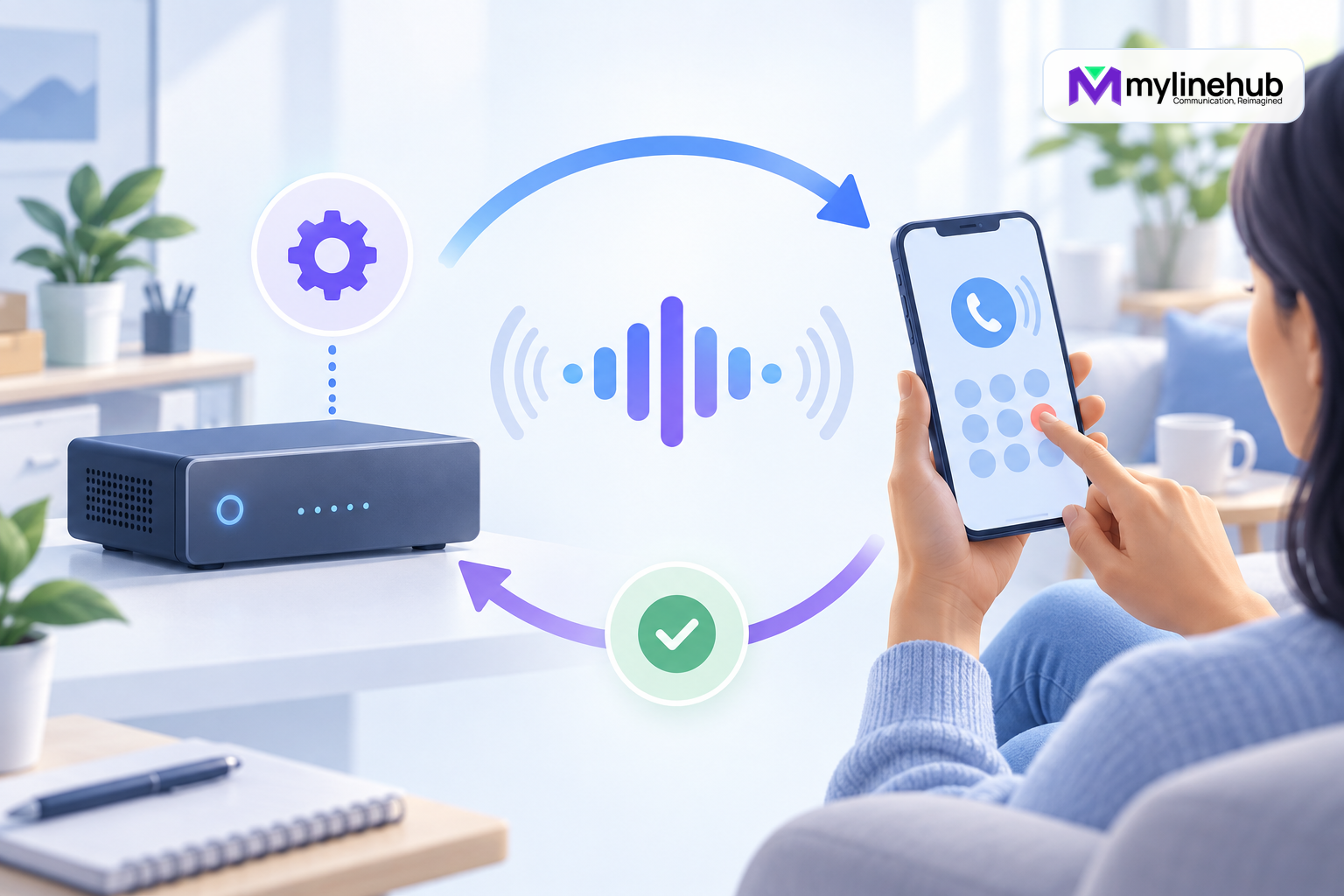
In MYLO's customer-to-IVR flow, the system calls an approved customer number and, after answer, places that caller into a defined automated voice and keypad journey. No human agent leg is required. The flow can support narrow reminders, confirmations, acknowledgements, or surveys when the business has an appropriate purpose, contact authority, schedule, prompts, caller ID, and response process. It should not imitate a human campaign or use an IVR as an excuse for uncontrolled bulk contact. After approval, deterministic services select eligible records, enforce pacing, capacity, attempts, and retries, and pass calls to Asterisk. The provider supplies the trunk, channels, and authorised numbers. The business owns notice, consent, prompt accuracy, DTMF outcomes, recording choices, follow-up, and compliance. Real calls must verify audio, keypad recognition, and failure paths.
Originate the Customer Call
The runtime chooses an eligible record only inside the approved window and attempt policy. It uses an authorised business DID and preserves busy, no-answer, invalid, rejected, answered, and provider-error evidence. A machine or voicemail may answer, so the first prompt should not disclose sensitive content.
Campaign capacity differs from human flows because no agent lane is required, but provider channels, local resources, pacing, and customer protections still limit activity. “No human” does not mean “unlimited.”
Enter the IVR
After the required answer state, Asterisk plays the approved prompt and accepts defined keypad input. Keep the task short. State who is calling, why, the available actions, and what each response means. Handle no input, invalid input, repeat, and hang-up with finite rules.
DTMF can travel differently across providers and networks. Test actual external calls rather than relying on local key simulations. Prompt language, audio quality, and timeouts must suit the intended audience.
Turn Input Into an Outcome
A key press is evidence of an interaction, not automatic proof of identity, comprehension, payment, or contractual agreement. Map each response to a bounded outcome and human-owned next step. For example, “press 2 to request a callback” should create an owned callback task, not silently retry the same IVR.
Preserve the number dialled, DID used, attempts, prompt version, digits, timestamps, and final telephony result where appropriate. Restrict access and retention according to business policy.
Practical Example
A clinic uses an approved list to remind patients of appointments without presenting MYLO as a medical system. The prompt identifies the clinic without stating sensitive treatment details. Press 1 confirms attendance, press 2 requests a callback, and no input ends after a bounded repeat. Callback requests go to named scheduling staff.
The clinic obtains appropriate advice, approves contact windows, tests mobile networks and DTMF, and defines what happens if voicemail answers. It does not interpret a key press as identity verification or use the result beyond the stated purpose.
Responsibilities and Limits
- The customer owns lawful purpose, list authority, notices, privacy, responses, and follow-up.
- The provider controls reachability, channels, signalling, and authorised caller ID.
- MYLO uses deterministic execution; AI does not improvise live prompts or retry policy.
- DTMF and answer evidence have technical limitations.
- Emergency, regulated, payment, or high-stakes workflows need specialised review and may sit outside the product boundary.
Checklist
- Is the automated call appropriate and authorised?
- Does the prompt identify purpose without exposing sensitive data?
- Are no-input and invalid-input paths finite?
- What owned action follows every key?
- Are schedule, pacing, capacity, attempts, and retries bounded?
- Is caller ID authorised?
- Have voicemail, DTMF, and external network cases been tested?
- Can reporting distinguish technical completion from business outcome?
Compare the human flows in Five Ways MYLO Connects Agents and Customers and clarify the terminology through Connection Flow vs Dialer Strategy.
Design a Short, Bounded Automated Interaction
Customer-to-IVR works best for a narrow purpose such as confirmation or brief feedback. State the business identity and purpose promptly, keep the prompt short, define every permitted digit, and handle no input, invalid input and hang-up explicitly. A key press is evidence of the configured response, not automatic proof of identity or contractual agreement.
No human operator is reserved, but provider channels and appliance resources still bound concurrency. Test the authoritative IVR selected for the campaign, including prompt audio, DTMF recognition, every branch and final event result. The business remains responsible for lawful purpose, consent, calling time and follow-up.
Continue planning
Continue with Five Ways MYLO Connects Agents and Customers; Agent Mobile to Customer Phone: How the Flow Works; Connection Flow vs Dialer Strategy: What Is the Difference?. For deeper implementation context, use MyLineHub technical architecture guidance.
For a requirement outside the prepared MYLO scope, discuss the exact outcome with MyLineHub.
Want to see API-driven CRM + Telecom workflows in action? Try the WhatsApp bot or explore the demos.
Comments (0)
Be the first to comment.