Using IVR Calls for Customer Feedback
A short customer-to-IVR call can collect limited feedback after a genuine transaction or service event. A caller might rate the experience using three keypad questions and optionally request human follow-up.
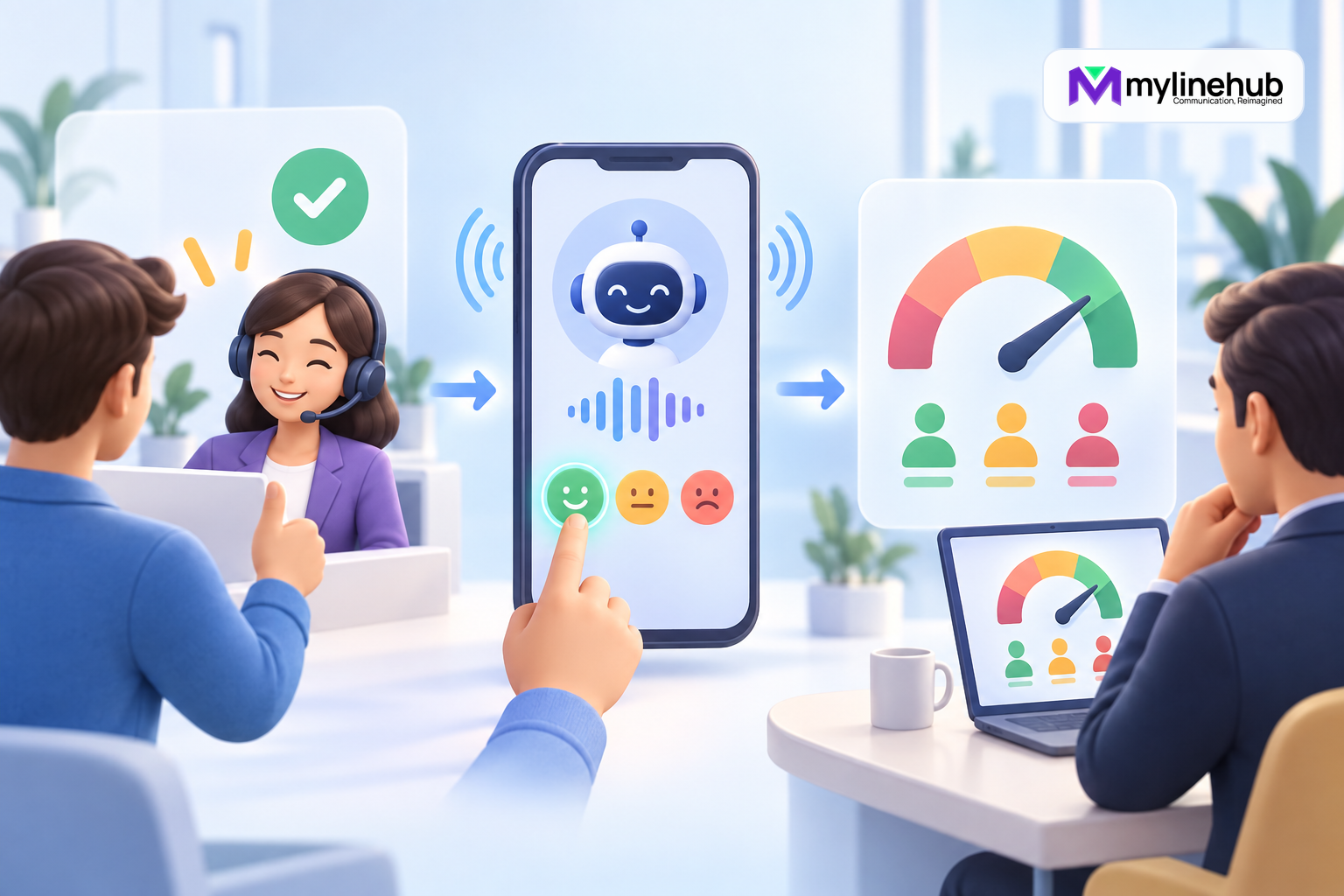
A short customer-to-IVR call can collect limited feedback after a genuine transaction or service event. A caller might rate the experience using three keypad questions and optionally request human follow-up. The design should remain brief, purpose-specific, consent-aware, and easy to decline. It is not a reason to place indiscriminate robocalls or to turn a telephone keypad response into a complete judgement about a customer or employee.
Define One Feedback Purpose
Decide what the business needs to learn and what decision the result will support. A service centre may ask whether collection was satisfactory. A retailer may ask about delivery. A support team may ask whether the issue was resolved. Mixing satisfaction, marketing, demographic research, and sales into one automated call makes the purpose unclear and weakens consent.
Use an audience connected to the specific transaction and confirm that the planned call is permitted and consistent with preferences. Exclude suppressed records, wrong numbers, unresolved sensitive complaints, and recipients who should receive human care instead. A completed purchase alone should not be treated as unlimited permission for future automated marketing.
Keep the Survey to a Few Clear Questions
Three questions are often enough for a transactional telephone survey. Identify the organisation, explain the narrow purpose and approximate effort, provide a decline option, and use the same scale consistently. For example, the prompt can state that 1 is very dissatisfied and 5 is very satisfied before each rating where needed.
Avoid questions that require a long memory, complex ranking, or sensitive disclosure. Voice menus are poor tools for nuanced testimony. If detailed feedback is necessary, offer an approved human or digital route rather than forcing it into keypad choices.
Handle DTMF, No Input, and Incomplete Responses
Record each valid key against the correct question and reject keys outside the stated range. If no input arrives, repeat the question once or offer to end. If the caller disconnects halfway, store the result as incomplete rather than filling unanswered fields or treating the last answer as a full survey.
Test DTMF through the real provider path from more than one external network where practical. Keypad tones can fail even when audio sounds normal. Verify that a single press produces one event and that replay or retry does not duplicate a previous answer.
Offer Responsible Follow-Up
A low rating may offer the customer an option to request contact, but it should not silently enrol the person in repeated calls. Assign an authorised team to follow-up requests, define a realistic response period, and give staff enough transaction context without exposing unnecessary data.
Do not claim that an automated survey handles a complaint. Serious safety, discrimination, fraud, or vulnerable-customer concerns need established human procedures. The IVR can route or flag an approved request; it cannot assess severity or replace case management.
Report Carefully
Show attempted, answered, started, completed, declined, incomplete, invalid-input, and follow-up-requested counts. A satisfaction average without response rate and completion context can be misleading. Separate technical failures and no answers from actual feedback.
Use aggregated results to identify themes and design further investigation. Do not treat a keypad score as verified identity, proof of an event, or a fair standalone measure of one employee. Small samples, selection bias, repeat callers, and shared phone numbers affect interpretation.
Respect Preferences and Data Limits
Tell recipients how to decline the call and honour contact preferences through the approved process. Retain individual responses only as long as the purpose requires, restrict access, and decide whether aggregated reporting can remove identifiers. Keep survey results separate from unrelated marketing audiences unless there is a separately valid basis and transparent process.
Recording the entire call is usually unnecessary when validated keypad events provide the intended result. If any audio is recorded, apply the organisation’s approved notice, authority, access, and retention rules.
Pilot the Survey Before Scaling It
Run a small authorised pilot that represents the intended customer journey. Listen to the prompt on ordinary mobile connections, measure how many recipients reach each question, and ask a few participants whether the scale was understandable. A technically completed call can still produce poor data when the wording is ambiguous or the sequence is tiring.
Set a stopping rule for the pilot. A high invalid-input rate, early hang-up rate, complaint rate, or DTMF failure should pause expansion while the owner investigates. Do not compensate by calling a larger audience. Correct the prompt or provider path and repeat the same controlled cases.
Decide how free-form feedback will be handled. A keypad IVR is intentionally bounded; it should not invite spoken complaints unless the organisation has approved recording, transcription, access, and follow-up processes. A safer option may be a key that requests a human callback through an accountable queue.
Document how insights lead to action. Assign an owner to review aggregated results, distinguish service themes from technical survey failures, and record which process change is being tested. If no team will use the answers, the organisation should reconsider whether collecting the data is necessary.
Protect Anonymity Claims and Response Integrity
Do not call a survey anonymous when telephone numbers, transaction references, call events, recordings, or follow-up requests can identify the participant. If reporting is intended to be de-identified, document when identifiers are removed, who can access the original record, and what small-group reporting rules prevent re-identification.
Shared phones and repeat attempts can also affect integrity. One person may answer on behalf of another, and the same transaction may produce duplicate responses if source reconciliation fails. Define whether the first valid response, latest response, or a reviewed resolution is authoritative. Keep the raw event history so corrections are explainable.
If incentives are offered, explain eligibility clearly and assess whether they could encourage repeated or unreliable submissions. The IVR should validate only the permitted keypad range; it should not infer identity or honesty from caller ID.
Feedback IVR Checklist
- Use a narrow transactional purpose and an approved audience.
- Identify the business, effort, scale, and decline option clearly.
- Limit the survey to a few understandable keypad questions.
- Preserve incomplete and invalid results without inventing answers.
- Assign owners to requested human follow-up.
- Report response context and avoid unfair individual conclusions.
- Test DTMF and every result path through the real provider.
Continue planning
Continue with Five Ways MYLO Connects Agents and Customers; Automated Calls for Appointment Confirmations; How to Design a Lawful, Consent-Based Outbound Campaign in India. For deeper implementation context, use MyLineHub technical architecture guidance.
For a requirement outside the prepared MYLO scope, discuss the exact outcome with MyLineHub.
Want to see API-driven CRM + Telecom workflows in action? Try the WhatsApp bot or explore the demos.
Comments (0)
Be the first to comment.