What Happens When a Customer Does Not Answer?
When a customer does not answer a MYLO campaign call, the attempt receives a no-answer result, the campaign records that outcome, and deterministic execution moves on according to the approved retry policy.
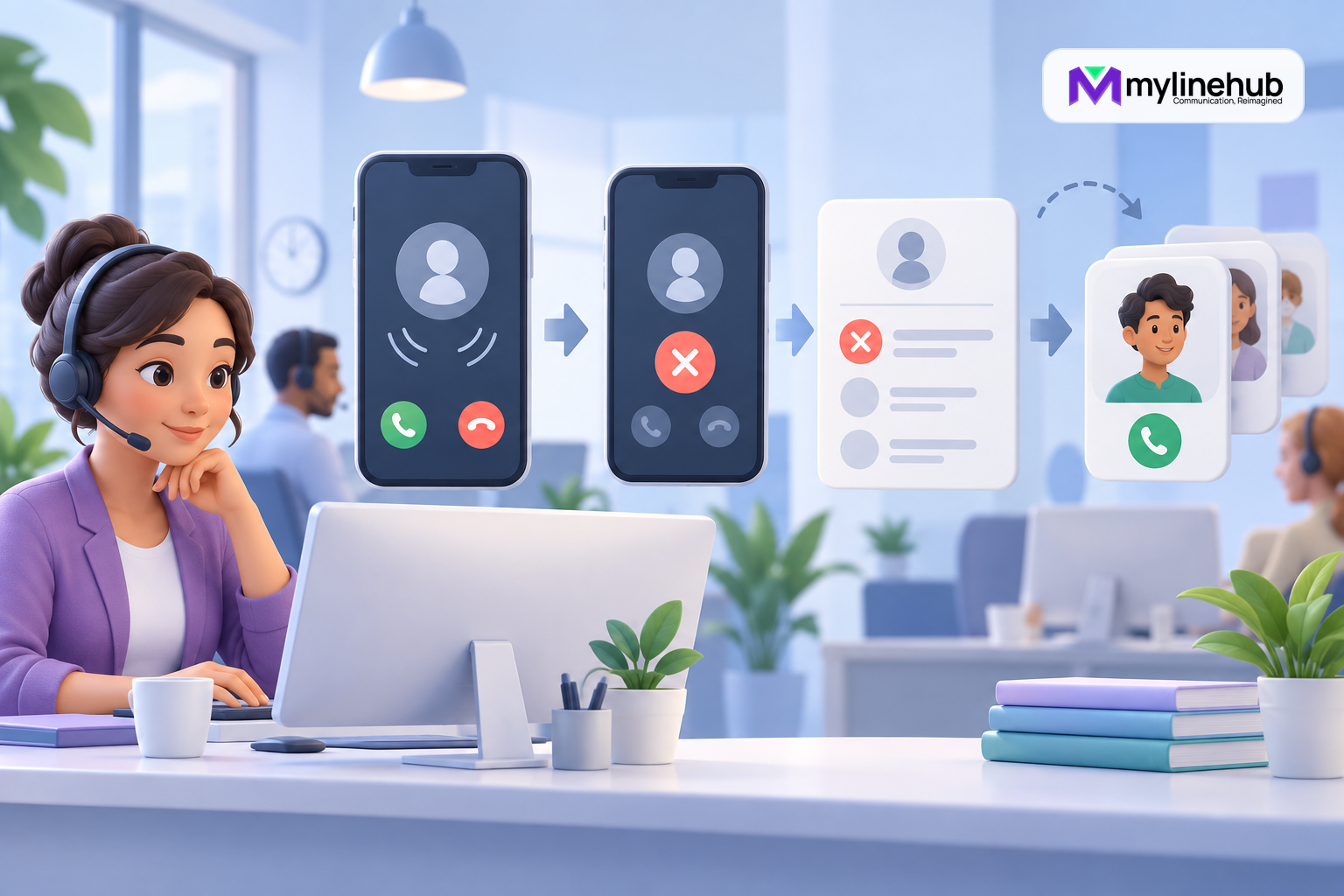
When a customer does not answer a MYLO campaign call, the attempt receives a no-answer result, the campaign records that outcome, and deterministic execution moves on according to the approved retry policy. Retry is disabled by default. If an authorised person explicitly enables the supported option, one eligible retry may be scheduled for a genuine customer no-answer. After that opportunity, the record receives its final outcome and the campaign continues. MYLO does not keep redialling until somebody answers.
The Attempt Result Comes First
Each lead attempt needs a clear result based on the relevant call leg. In a customer-first flow, the first event is the call to the customer. The provider and Asterisk may report ringing followed by no answer, busy, rejection, network failure, or an answered call. These outcomes are not interchangeable. The event history should preserve what the telephony path actually observed rather than replacing every unsuccessful attempt with the vague label “failed”.
No answer means the customer leg rang but was not answered within the approved attempt conditions. It does not prove that the person refused the call, that the number is invalid, or that a later call is wanted. Busy, provider rejection, invalid destination, and technical failure need their own treatment. A business should not use the optional no-answer retry to conceal bad lead data or an infrastructure problem.
Retry Is Disabled by Default
The safest default is one controlled attempt. When retry is disabled, a no-answer record receives its final no-answer status for that campaign and execution advances to the next eligible lead. This makes the campaign’s customer-contact behaviour understandable before launch and prevents a hidden redial loop.
The campaign owner may choose the supported one-retry option when the purpose, consent, customer expectation, and operating policy justify it. That decision should be visible during preparation and approval. The owner should also define the delay or eligible retry window within supported settings, rather than allowing individual agents to redial informally.
One Eligible Retry Means One, Not an Open Loop
An eligible customer no-answer can enter a deterministic retry state. The retry occurs only under the approved campaign rules and only if the campaign remains active, the record is still eligible, and calling conditions allow the work to start. If the customer answers during the retry, the normal selected connection flow continues. If the retry also ends as no answer, the lead receives its final status.
Pausing, an appliance restart, or a shortage of available agents should not silently reset the attempt counter. Persisted state must preserve whether the first attempt occurred and whether a retry remains. This prevents the same record from returning to the beginning merely because execution was interrupted.
Move to the Next Lead Without Losing Evidence
After the result is committed, the deterministic scheduler evaluates the next eligible lead for the selected flow and available capacity. The no-answer lead remains in campaign reporting with its attempt history, timestamps, and final status. It should not disappear from the campaign or be rewritten as “completed” merely to make progress totals look cleaner.
Supervisors can use aggregate no-answer patterns to review calling times, number quality, caller-ID recognition, and campaign relevance. They should not infer an individual customer’s intent from silence. Any later follow-up outside the campaign needs its own authority and should not bypass suppression or preference rules.
Distinguish No Answer From Second-Leg Failure
In a customer-first human flow, a customer may answer before MYLO calls the agent destination. If that second leg fails, the customer did answer; the record is not eligible for a customer-no-answer retry. The system needs leg-aware results so an agent-side failure does not cause another unsolicited call to a customer who already picked up.
In an agent-first flow, the agent must be ready before the customer leg starts. If the agent leg fails, no customer call should be originated. Operational staff should fix the agent or endpoint problem rather than consuming a customer retry.
Choose Retry Timing From Customer Context
If the optional one-retry policy is approved, choose its timing from the campaign purpose, consent scope, calling window, likely customer context, and current official requirements. An immediate second call may look like harassment or resemble a fraud pattern. A retry too late may no longer serve a time-sensitive reminder. The supported setting should be documented and applied consistently rather than left to individual agents.
Check the recipient’s preference and suppression state again when required before the retry begins. If the person contacted the business, opted out, corrected the number, or completed the intended action through another channel after the first attempt, the pending retry may no longer be eligible. The authoritative business system and MYLO need a defined reconciliation process where such changes can occur.
Review no-answer volume by time band, caller ID, provider result, and list source. A sudden increase can indicate a provider, routing, or number-quality issue rather than customer behaviour. Pause and test when the pattern changes materially; do not automatically increase attempts to compensate.
No-Answer Procedure Checklist
- Confirm retry is disabled unless the campaign owner explicitly approves one eligible retry.
- Keep no answer separate from busy, rejection, invalid number, and technical failure.
- Preserve attempt count and retry eligibility across pause, resume, and restart.
- Never convert an agent-side failure into a customer no-answer.
- Commit the final result before advancing to the next lead.
- Review aggregate patterns without guessing individual customer intent.
Continue planning
Continue with Five Ways MYLO Connects Agents and Customers; What Is Per-Agent Pacing in an Outbound Campaign?; Why MYLO Should Not Retry a Customer Because an Agent Failed. For deeper implementation context, use MyLineHub technical architecture guidance.
For a requirement outside the prepared MYLO scope, discuss the exact outcome with MyLineHub.
Want to see API-driven CRM + Telecom workflows in action? Try the WhatsApp bot or explore the demos.
Comments (0)
Be the first to comment.