Why Recording Is Chosen Before a Campaign Starts
Recording is chosen before a MYLO campaign starts because it changes the purpose, privacy obligations, storage needs, access controls, failure behaviour, and acceptance test of every connected call.
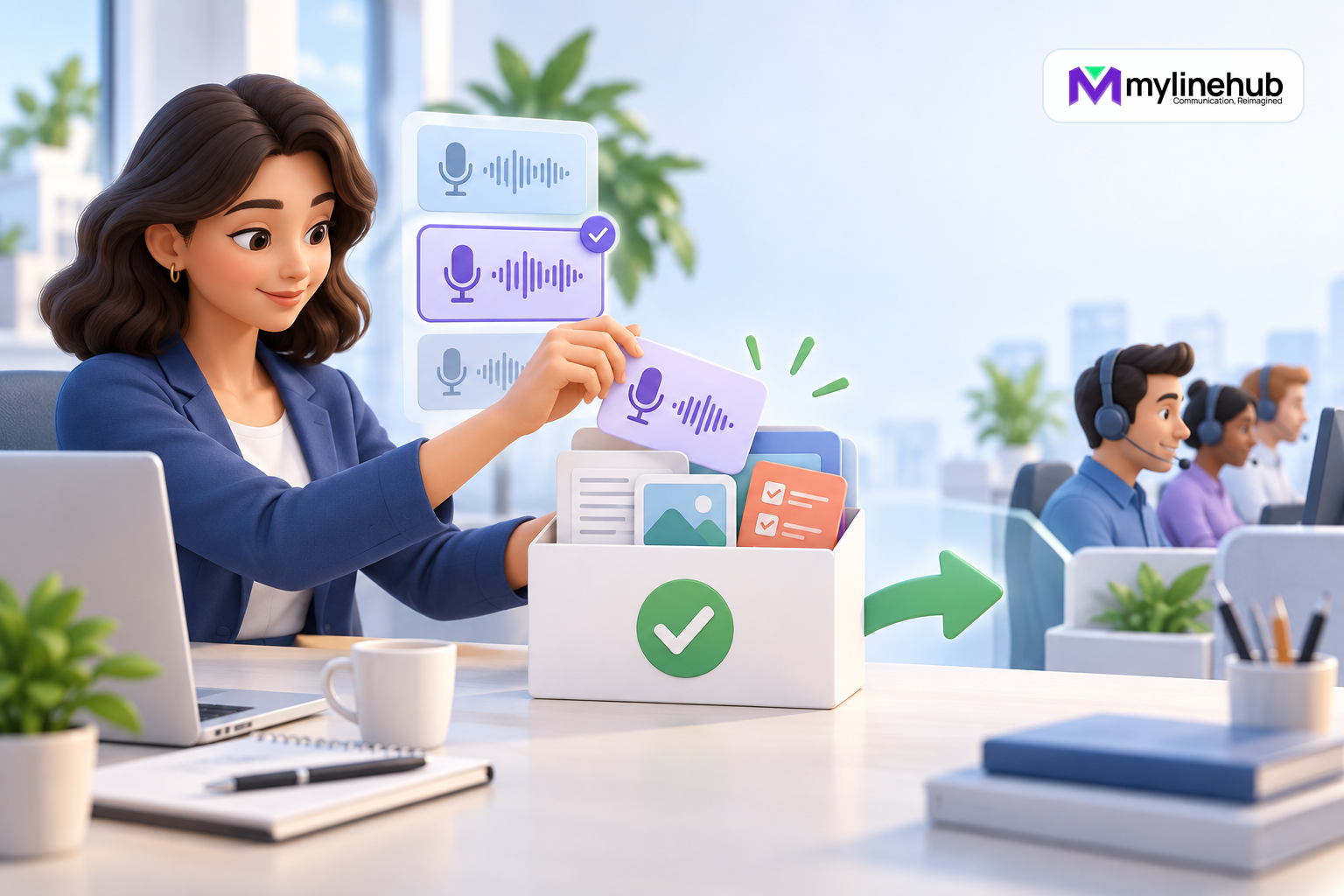
Recording is chosen before a MYLO campaign starts because it changes the purpose, privacy obligations, storage needs, access controls, failure behaviour, and acceptance test of every connected call. It should never be an invisible technical default discovered after customers have been contacted. At campaign setup, the authorised business owner decides whether recording is required for that specific purpose and whether it is lawful and proportionate. MYLO can capture that decision, validate supported configuration, and keep campaign execution consistent with it. MYLO does not provide legal approval, create consent, decide retention, or guarantee that every call can be recorded under every provider and topology. The customer owns notices, permissions, access, retention, deletion, monitoring policy, and any sector-specific requirements.
Recording Is a Level-1 Campaign Decision
Recording affects the campaign’s basic operating contract, so it belongs beside the connection flow, audience, schedule, and responsible owner. It should be decided before leads are called, not left to an agent’s accidental device setting or a hidden dialplan inheritance.
The decision should be explicit: recording enabled or disabled for the supported campaign, together with its approved purpose. If the answer is unknown, campaign creation should pause for a responsible person rather than assume that collecting more data is safer.
Define the Business Purpose
Common stated purposes include quality review, training, dispute handling, documented consent, regulated evidence, or service verification. Each purpose should be assessed for necessity and proportionality. “We may need it someday” is not a useful retention purpose.
The business should identify whose calls are recorded, which campaign types are covered, who can listen, how recordings are used, and when they are deleted. A purpose for customer-service quality does not automatically authorise unrelated profiling or broad internal sharing.
Notice, Consent, and Customer Responsibility
Recording and monitoring laws vary by jurisdiction, parties, purpose, and sector. The customer must obtain legal and compliance guidance appropriate to its circumstances. It must approve any spoken notice, agent script, consent mechanism, opt-out path, and treatment of calls where consent is withheld.
A campaign file or system checkbox cannot prove that the required notice was understood. If a recording notice is part of an IVR or agent script, the functional test must confirm it occurs at the correct time. Marketing, healthcare, finance, and other sensitive contexts may require additional controls.
Storage and Retention
Audio consumes storage continuously, and volume depends on connected calls, duration, encoding, and retention. Capacity planning should include expected campaign activity plus other recordings on the appliance. Storage monitoring needs thresholds and an owner; “disk full” should not be the first warning.
Set a retention period tied to the approved purpose and applicable requirements. Deletion should be reliable and auditable. Backups may contain recordings after the primary copy is deleted, so the retention design must address backup lifecycle as well. Do not copy recordings into general file shares without equivalent controls.
Access and Export Controls
Limit playback, download, and deletion to authorised roles. An agent may need access to a current interaction while a supervisor has broader review duties; neither automatically needs every campaign recording. Record access events where appropriate and protect exported files after they leave the appliance.
Recordings can contain names, contact details, account information, and other sensitive speech even when the lead file was minimal. Treat the audio according to its actual content and risk. Avoid using public links, shared credentials, or filenames that expose unnecessary personal information.
What Should Happen if Recording Fails?
The campaign owner must decide whether recording is mandatory or preferred. If mandatory for law, contract, or business process, failure to establish recording may require the call to stop or the campaign to pause. If recording is optional, the call may continue only if that behaviour was approved and accurately represented to participants.
This rule must be deterministic and visible. The live dialer should not ask an LLM to improvise after each recording error. Failures should create operational evidence, avoid falsely marking the call as recorded, and trigger the configured alert or campaign response.
Recording Through Two-Leg Campaign Flows
MYLO’s human campaign flows can involve one leg to a customer and another to an agent extension or mobile. Recording must follow the intended bridged conversation, not capture only a prompt, ringback, or one isolated leg. The exact behaviour depends on the supported telephony implementation and should be verified, not assumed from a file appearing on disk.
An IVR campaign has no human agent but still creates customer audio and keypad interactions. Its recording purpose and notice require separate review. The fact that a flow is automated does not make recording automatically acceptable.
Practical Example: Quality Review Campaign
A service company plans a customer callback campaign handled by five remote agents. It decides that recording is necessary for a defined quality-review programme, approves a short notice, restricts playback to two supervisors, sets a documented retention period, and provides a process for customer requests and exceptions.
During the functional test, the team verifies that the notice is delivered, the agent and customer are both audible after connection, the recording is linked to the correct attempt, access permissions work, and failure creates the approved campaign response. Only after those checks does the owner approve wider execution.
MYLO and Customer Boundaries
MYLO can include the recording choice in campaign preparation, validate supported relationships, configure deterministic execution, and expose accurate status. Asterisk is the live telephony authority for recording behaviour. The operating system and storage provide machine evidence, while the customer’s policy provides the purpose and authority.
MYLO cannot decide that recording is legal, guarantee a third-party provider path, or recover audio that was never captured. Custom encryption, archival, transcription, analytics, or external compliance integration may require separately scoped MyLineHub work and should not be assumed to be included in the fixed appliance.
Pre-Campaign Recording Checklist
- State whether recording is enabled or disabled for this campaign.
- Document a specific purpose and responsible business owner.
- Confirm applicable notice, consent, opt-out, and sector requirements.
- Approve the prompt or agent script and its timing.
- Estimate storage and define monitoring thresholds.
- Set access, export, retention, deletion, and backup rules.
- Decide deterministically what happens if recording fails.
- Test the complete bridged audio, not merely file creation.
- Verify accurate association with the campaign attempt.
- Reapprove the decision when purpose or flow changes.
Choosing recording early makes the campaign honest and testable. It protects customers and operators from a hidden default while giving the business time to build the controls that audio data deserves.
Design the Recording Evidence and Incident Process
Define what the system must record about recording itself: enabled decision, policy version, start and stop evidence, file identity, linked attempt, access history where applicable, deletion state, and failure reason. Metadata should not claim success merely because recording was requested. The actual file and live telephony evidence must agree with the status.
Build an incident process for missing, silent, partial, corrupted, or mis-associated audio. Stop or pause new work when the campaign’s approved failure policy requires it. Preserve relevant technical evidence without distributing the sensitive audio widely. Identify whether the problem is call bridging, storage, permissions, media, disk capacity, or application association before attempting a change.
Quality review without uncontrolled copying
A quality programme should select recordings under an approved method, limit reviewers, document feedback, and avoid downloading large collections to personal devices. If transcription or AI analysis is added, treat it as a separate processing purpose with its own authority, vendor, security, retention, and accuracy assessment. Basic MYLO campaign recording should not be described as including every downstream analytics capability.
Ending the recording purpose
When the retention period expires or the purpose ends, deletion should cover primary storage, supported indexes, exports, and backups according to policy. If a legal hold or dispute changes deletion, record the authority and scope. Turning recording off for a future campaign does not by itself delete earlier authorised audio.
Acceptance Test for Recording
Use controlled test participants and exercise every connection flow included in the campaign. Confirm the approved notice, the point recording begins, both sides of the bridged conversation, pause or exclusion behaviour if supported, final file closure, attempt association, authorised playback, and the configured response to storage or recording failure.
Inspect duration and audibility rather than merely checking that a filename exists. Delete test audio according to policy after acceptance. Record who approved the result and which configuration was tested, because a later change to flow, prompt, storage, or provider can invalidate the evidence.
Continue planning
Continue with Five Ways MYLO Connects Agents and Customers; How Indian Phone Numbers Should Be Cleaned Before a Campaign; How MYLO Selects Caller IDs for Campaign Calls. For deeper implementation context, use MyLineHub technical architecture guidance.
For a requirement outside the prepared MYLO scope, discuss the exact outcome with MyLineHub.
Want to see API-driven CRM + Telecom workflows in action? Try the WhatsApp bot or explore the demos.
Comments (0)
Be the first to comment.