I Already Have a Landline or Business Number — Do I Need a New Number for MYLO?
MYLO is the telephony layer, not the company that issues your phone number. Learn how an existing number, provider service and MYLO appliance relate before deciding whether anything needs to change.
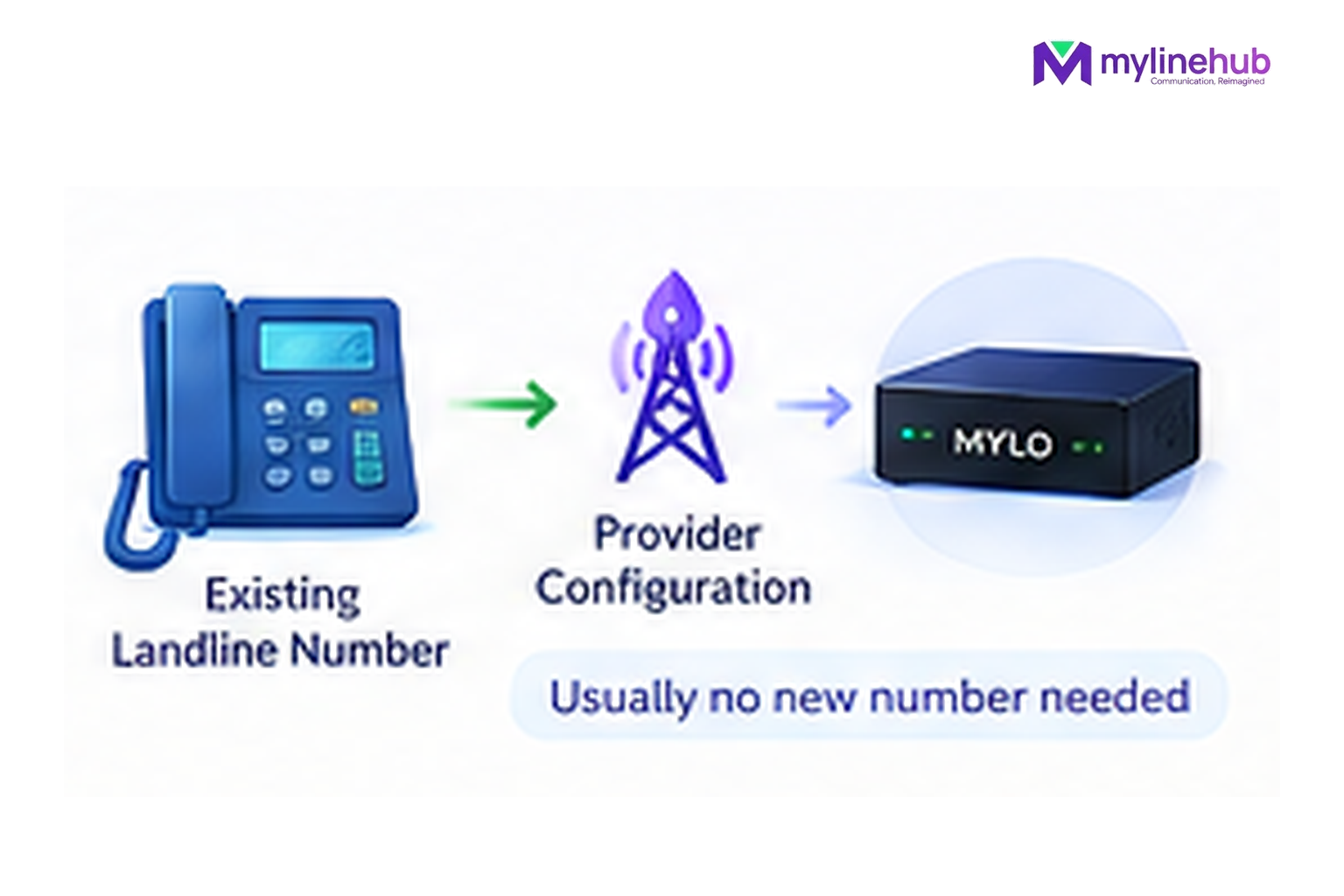
Not automatically. A MYLO appliance does not require you to abandon a number simply because you are changing the local phone-system layer. Whether an existing landline or business number can continue depends on the telecom provider, the service behind that number and how the provider can present or route calls to the new setup.
Quick answer
- Start from the business outcome; MYLO uses conversation to gather or clarify the information it needs.
- Consequential telephony work stays inside the product's permissions, validation and approval boundaries.
- The telecom provider remains responsible for public numbers, carrier service, capacity and provider-side conditions.
Number, service and MYLO are three different things
Business number
The public identity customers dial.
Telecom service
The provider delivers the call and defines the service terms.
MYLO
The on-premise system decides what happens after the call reaches it.
Your Number and Your MYLO Appliance Are Different Things
The business number belongs to the telecom-service side of the architecture. MYLO is the local appliance that decides what happens when a call reaches it. This distinction is useful because it lets you ask the right question: “Can my provider continue delivering this number to the connection MYLO will use?”
Three Common Outcomes
- The provider can keep the same number and deliver it over the existing compatible service.
- The provider can keep the number but needs a different handoff, migration or approved routing arrangement.
- The current service cannot be presented in the required way, so the provider must explain the available alternatives.
MYLO should not guess which outcome applies. The provider evidence determines that.
What MYLO Needs From You
Bring the provider document or exact carrier details. During setup, MYLO’s carrier stage is designed to inspect the current appliance and work from the supplied evidence before proposing a change. For a new service, collect the trunk information before ordering so the business and provider are aligned.
Keep the Customer Experience Separate From the Technology
From the customer’s point of view, the goal may simply be “keep calling the same number.” Behind that number, the business can modernise how calls are greeted, routed and answered. That is where MYLO adds value without forcing telecom terminology into the customer experience.
Continue From Here
Current public sources checked — 30 September 2026
For time-sensitive Indian telecom or data-protection statements in this article, prefer the current regulator, government or provider source over an old blog or forum post.
- Department of Telecommunications — Acts & Rules
Current DoT portal for the 2026 telecom authorisation and network rules.
Custom Requirements and Telecom Responsibility
MYLO configures and operates the customer's local telephony layer; it is not the telecom carrier. Numbers, trunk service, calling charges and provider-side permissions remain with the customer's telecom provider. Where a requirement sits outside the standard MYLO package, MyLineHub can discuss it as a Custom Requirement.
Customisation does not override telecom-provider conditions, customer-consent obligations or applicable Indian telecom requirements. The final calling design must use services and number-routing methods that the business is permitted to use.
Want to see API-driven CRM + Telecom workflows in action? Try the WhatsApp bot or explore the demos.
Comments (0)
Be the first to comment.