Can MYLO Call Customers and Play an IVR Instead of Connecting an Employee?
Some outbound calls do not need a live employee. Learn how a MYLO customer-to-IVR flow works at a business level and why consent, purpose and telecom compliance still matter.
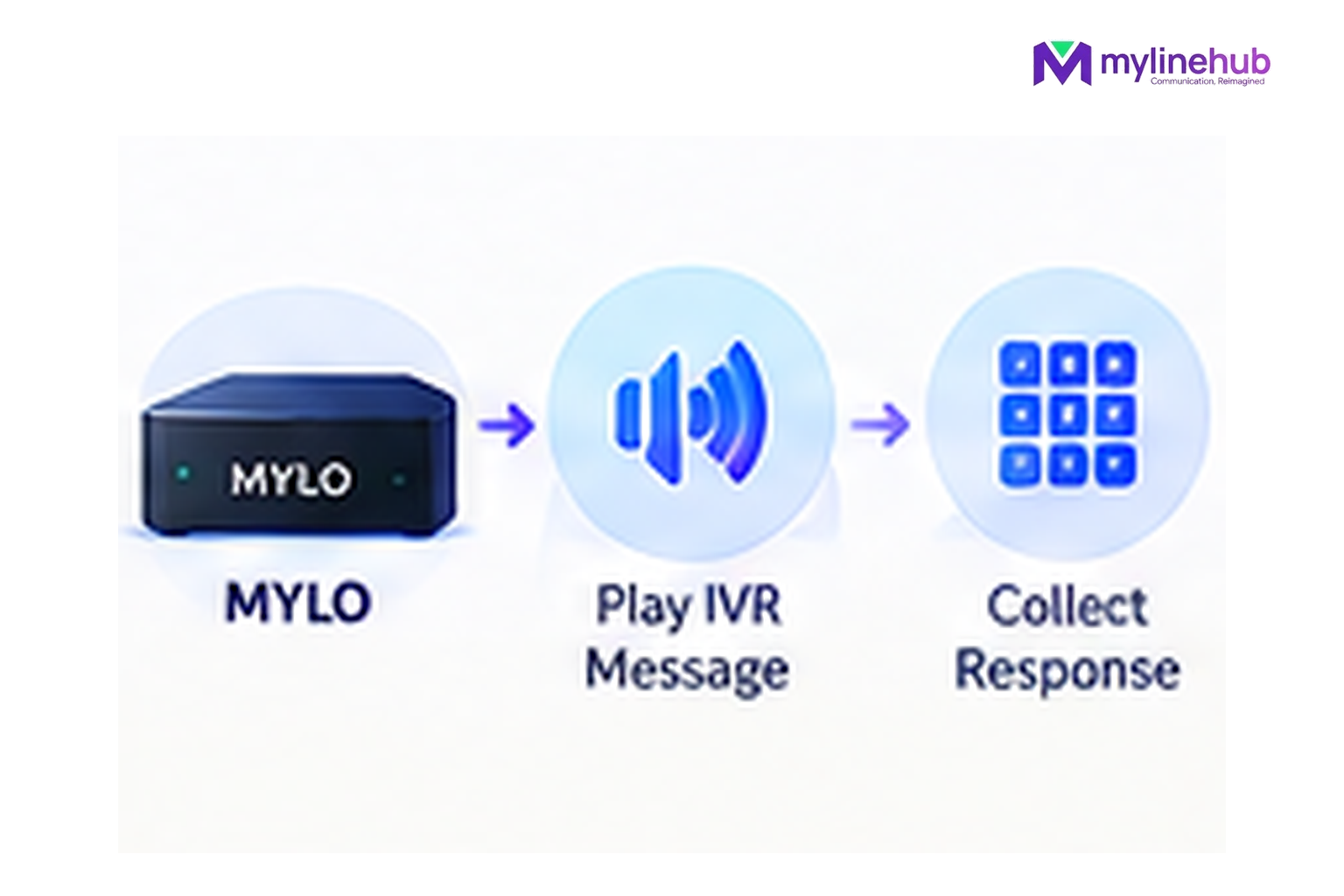
Yes. “Customer → IVR” is one of the five defined MYLO v0.35 campaign connection patterns. MYLO calls the customer first and, when the customer answers, connects the call to an active IVR identity instead of connecting a live employee.
Quick answer
- Start from the business outcome; MYLO uses conversation to gather or clarify the information it needs.
- Consequential telephony work stays inside the product's permissions, validation and approval boundaries.
- The telecom provider remains responsible for public numbers, carrier service, capacity and provider-side conditions.
Customer-to-IVR campaign flow
What This Flow Is Good For
A customer-to-IVR call can support a menu-driven interaction such as an appropriate confirmation, feedback or information workflow. The IVR can collect DTMF choices according to the configured menu. The business should keep the purpose short and clear because an automated outbound call is more intrusive than a customer choosing to call you.
The IVR Must Exist Before the Campaign Uses It
v0.35 treats the campaign IVR as an active immutable IVR identity. Campaign preparation selects that destination; the scheduler does not create a new IVR on the fly for each call. If you need to design the menu first, start with Can MYLO create an IVR?.
Recording and Outcomes Are Separate Decisions
The campaign draft has an explicit recording choice, and call outcomes are stored independently. Do not assume “IVR campaign” automatically means “record everything.” The business must choose the recording setting and handle any notice/consent requirements that apply to the use case.
Automated Calling Has Stronger Compliance Sensitivity
TRAI’s current material defines auto-dialer and robo-call concepts and maintains rules for commercial communication, consent and customer preferences. A technically working customer-to-IVR flow should therefore never be presented as permission to call any list for any purpose. Check the current rules and your originating access provider before launch.
Continue From Here
Current public sources checked — 30 September 2026
For time-sensitive Indian telecom or data-protection statements in this article, prefer the current regulator, government or provider source over an old blog or forum post.
- TRAI — TCCCPR Third Amendment Regulations, 2026
TRAI lists the Telecom Commercial Communications Customer Preference (Third Amendment) Regulations, 2026 dated 18 September 2026. - TRAI — What Is Spam or UCC?
TRAI's current explanation of unsolicited commercial communication, consent, preferences, auto-dialer calls and robo calls. - TRAI — Advice to Senders
Current TRAI guidance for businesses sending bulk or commercial communications.
Use MYLO Within Your Telecom and Customer-Consent Rules
MYLO provides the telephony and campaign layer; it does not turn an unapproved calling practice into an approved one. Businesses using outbound or automated calling must follow the current rules that apply to their purpose, sender registration, consent, customer preferences and telecom-provider service. TRAI maintains current guidance for commercial-communication senders and explains spam and unsolicited commercial communication.
Customisation is welcome. MyLineHub can discuss a Custom Requirement when the standard MYLO package does not cover the required workflow. Any custom implementation must still use telecom resources lawfully and follow applicable provider conditions and Indian telecom requirements.
Want to see API-driven CRM + Telecom workflows in action? Try the WhatsApp bot or explore the demos.
Comments (0)
Be the first to comment.